Chinese Paper Cutting
November 1, 2025
Chinese paper-cutting, known as jianzhi, is one of the oldest folk-arts from China and is a UNESCO Intangible Cultural Heritage of Humanity. The art involves cutting patterns into paper using scissors or small blades. Paper cuts have historically been used as stencils for embroidery, templates for dying clothes with indigo prints, and to decorate walls, windows, and clothing.
Most papercut artists were peasant women, and the tradition has been passed down from mother to daughter. Because of how many papercuts they made, most folk artists wouldn't need reference models for their work.
Paper cuts typically layered Chinese cultural symbols to convey complex messages. Common symbols include peaches, bats, mandarin ducks, and different types of flowers. As the art developed, more intricate cuts depicting stories from folktales and opera became popular. Contemporary papercuts also include pop culture.
Cuts used for decoration are usually made with bright, vibrant primary colors. Because red is an auspicious color in China, it's often used for ceremonial papercuts. A more recent tradition has seen the rise of patchwork cuts, where multiple colored sheets are layered in the design.
Folk artists use paper such as maobian (a type of calligraphy paper made of bamboo fibers) or newsprint. Maobian can be dyed into any color, and newsprint can have color brushed on it. Fancier traditional paper like xuan or lianshi can be used too-- each sheet of these papers is made with great care, and papercuts with them are usually colored after cutting. Sometimes artists will use tin or aluminum foil to make gold or silver leaf to use as decoration on other colored papercuts.
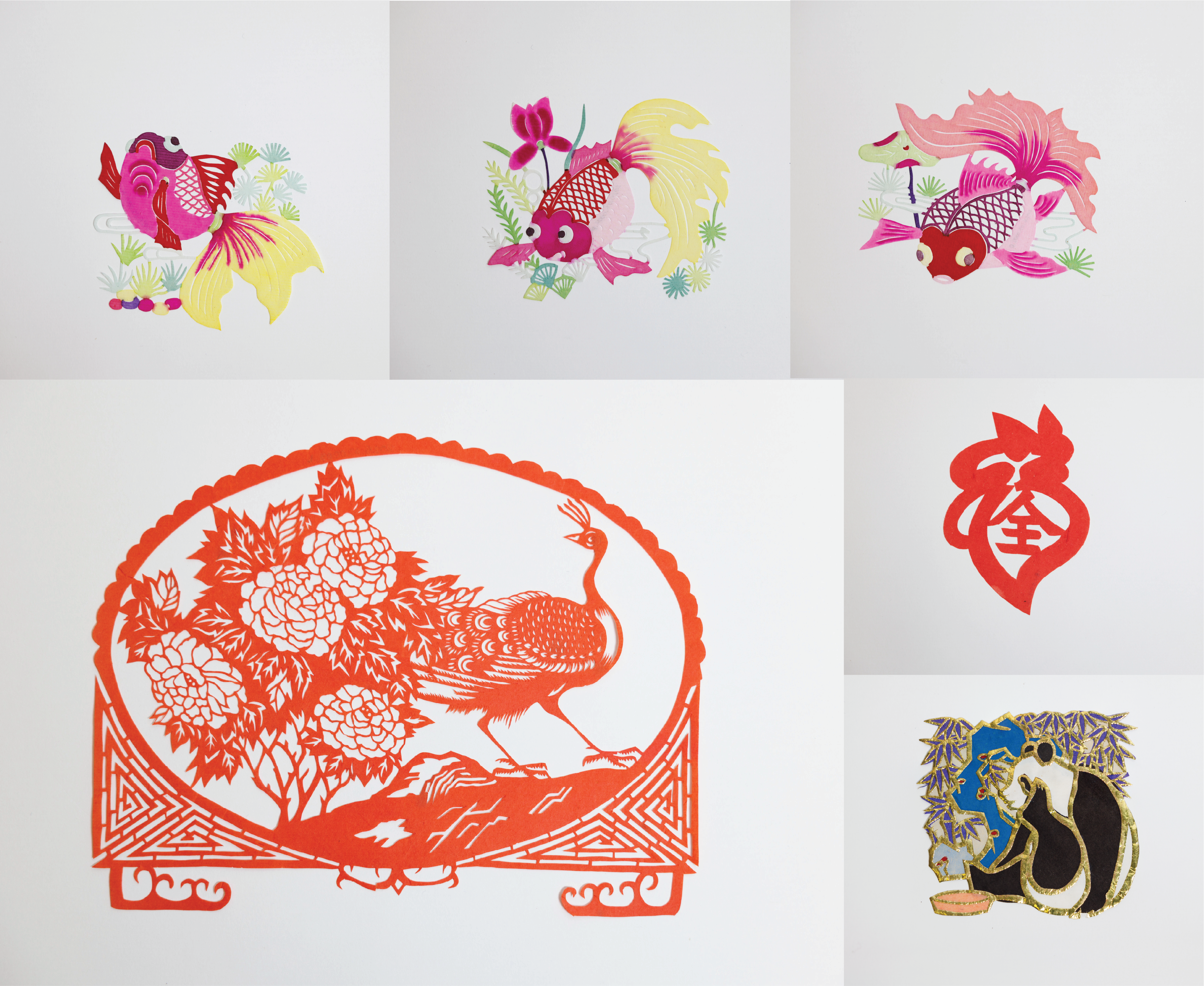
The first sample depicts a collection of goldfish papercuts. Goldfish are a common symbol for wealth as the Chinese words for goldfish (jin yu 金魚) are identical to words for "gold" and "abundance" (jin yu 金餘) and "gold" and "jade" (jin yu 金玉). This papercut is multicolored, and was painted after it was cut.
The second sample depicts a peacock in front of peonies. Peonies are known as "the king of the flowers" and symbolize both royalty and high accomplishment. Peacocks represent nobility and power. This is a good example of how intricate papercuts could be in their detail.
The third sample depicts a peach with the Chinese symbol "全" contained within. Peaches represent long life and immortality, and "全" can have a range of definitions ranging from complete, perfect, flawless, to preserve, and to maintain. Many papercuts combined visual symbols with text like this to create multi-layered meanings.
The fourth sample depicts a panda surrounded by bamboo. The papercut is gilded with decorative gold leaf.
Category: 3-D Objects
Region of Origin: Asian
Keywords:
Artist