Flax, Linseed
( Linum Usitatissimum )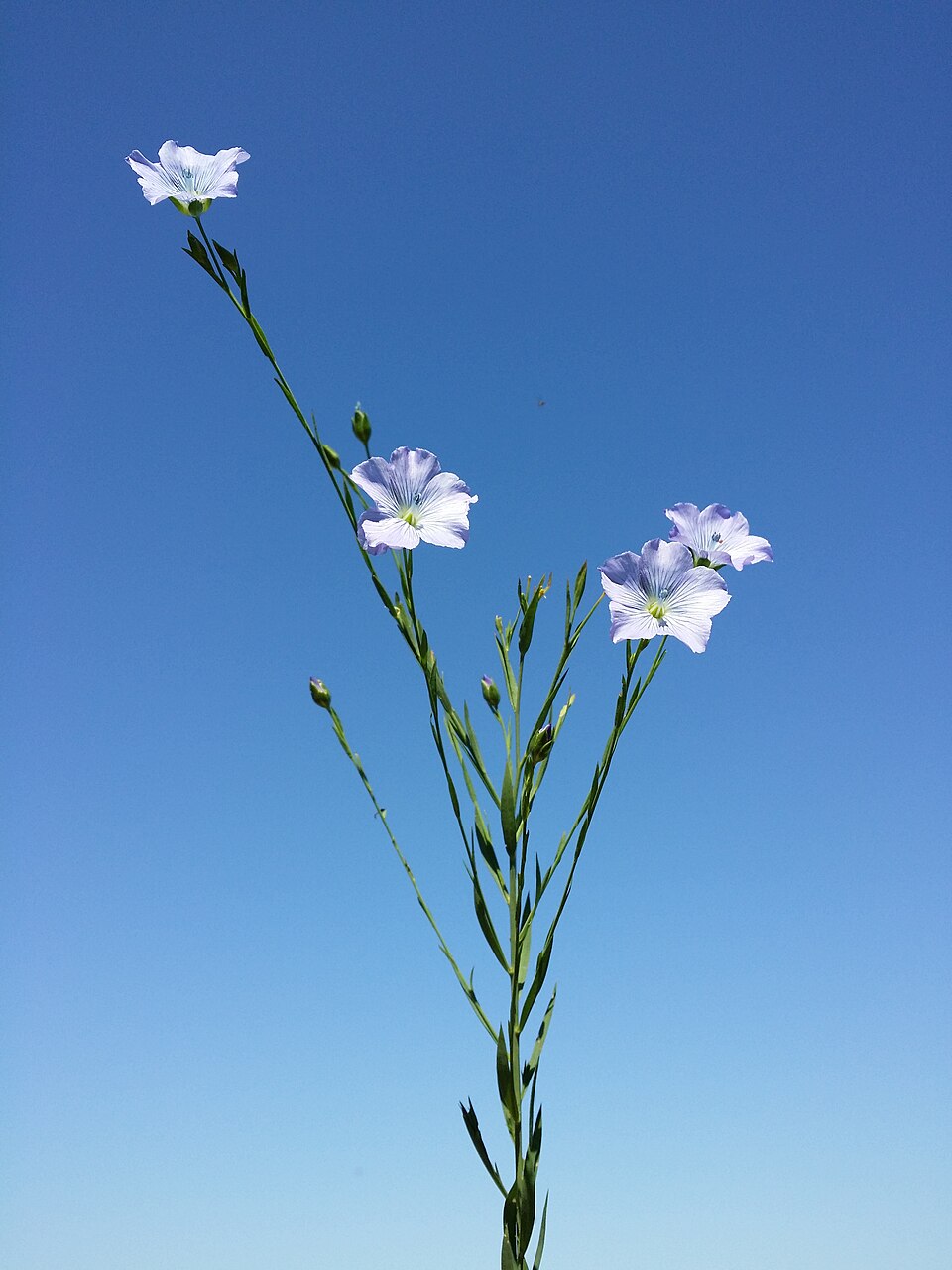
Quick Facts:
Planting and Care
Light: full sun. Does not tolerate shade.
Water: moderate
Soil: well-drained, mildly acidic to mildly alkaline
Tolerates strong winds and drought, dry and rocky soil but sensitive to clay soil (impedes rooting); does not tolerate "maritime exposure" (salt spray). Propagate via seed. Space plants 1–3 feet apart. Pruning after the initial bloom can extend the flowering period. Plant in spring for fall harvest. Pests include cutworms and grasshoppers.
Botanical Information
Height: 1-3 ft
Spread: 1-2 ft
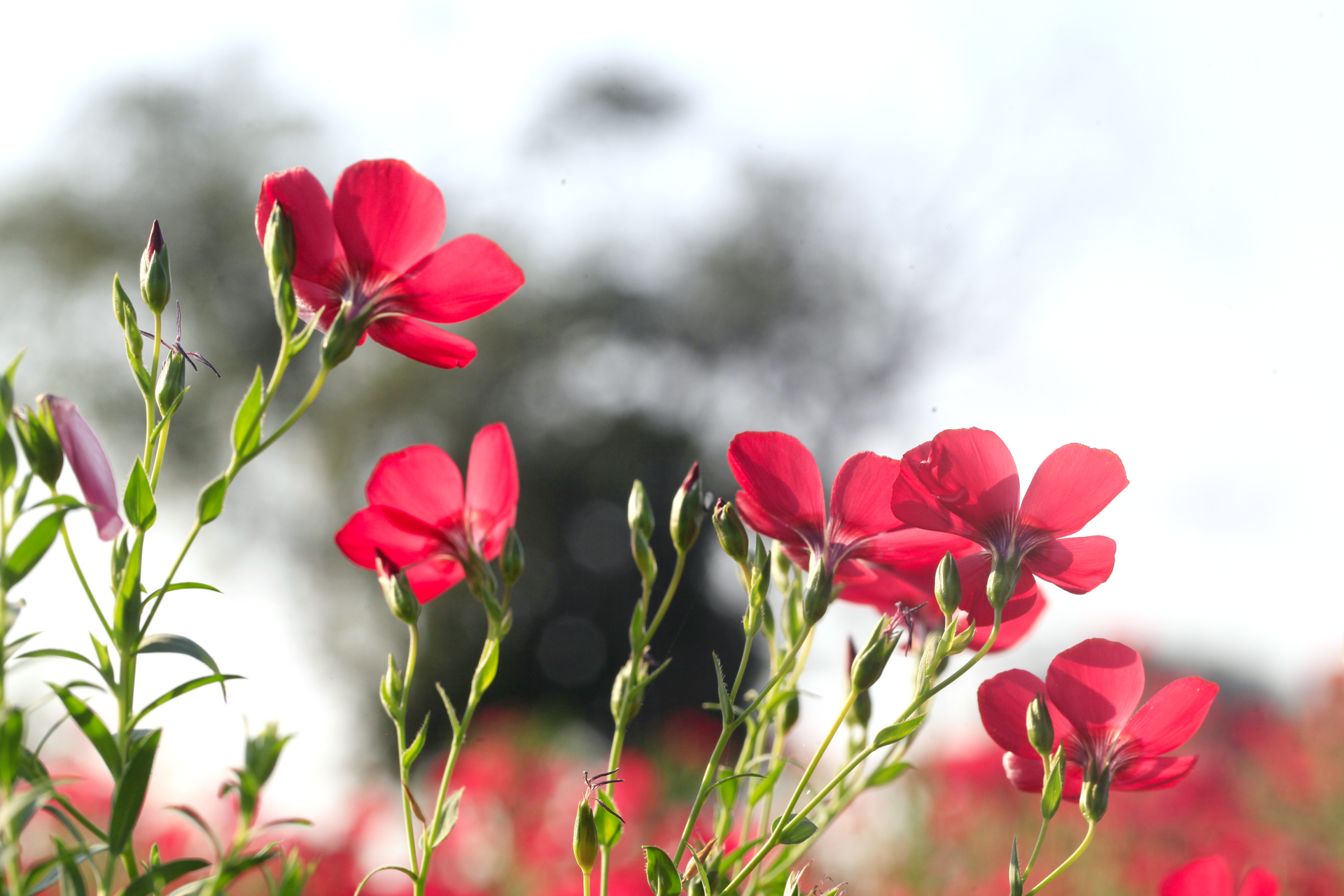
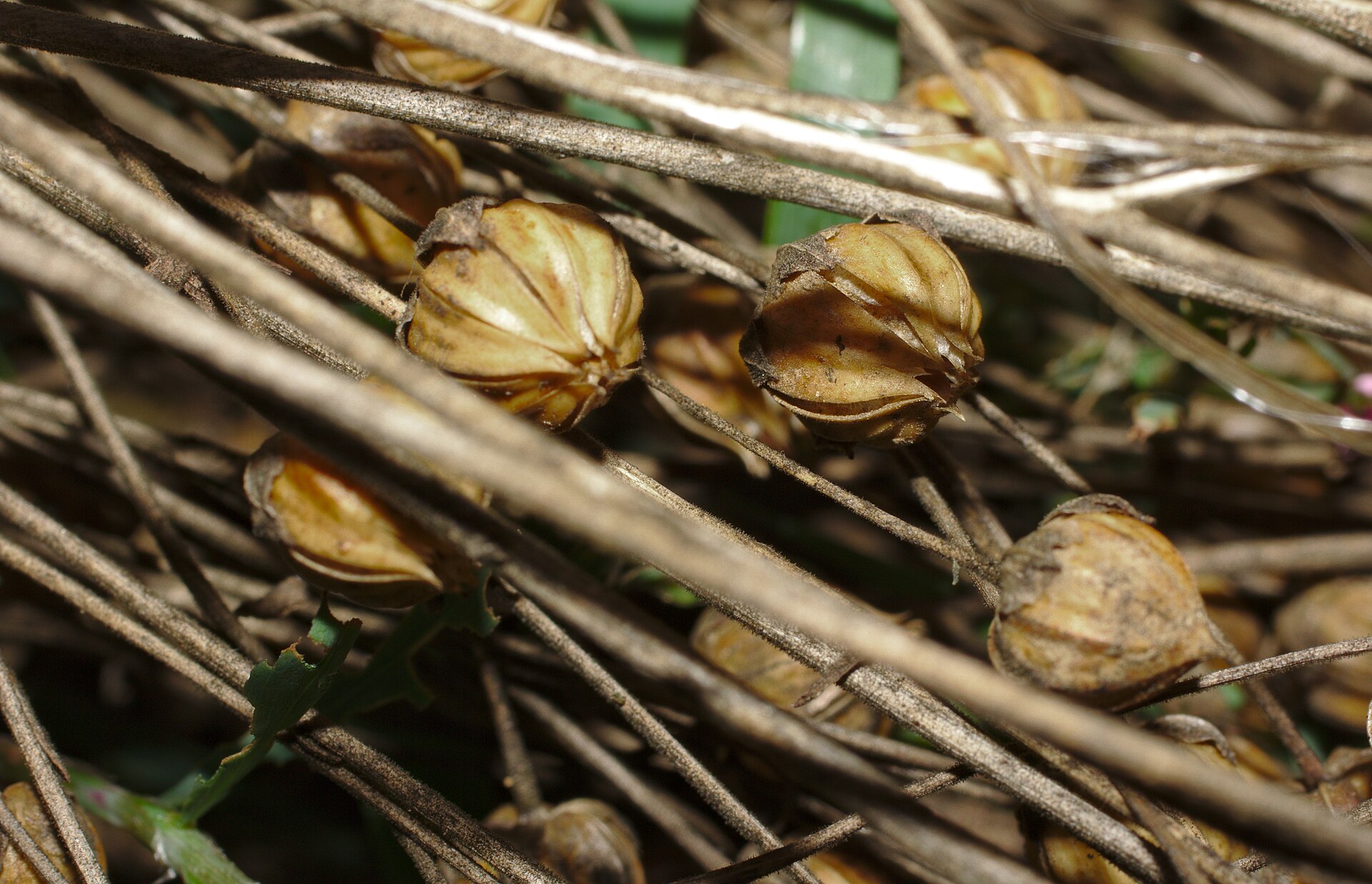
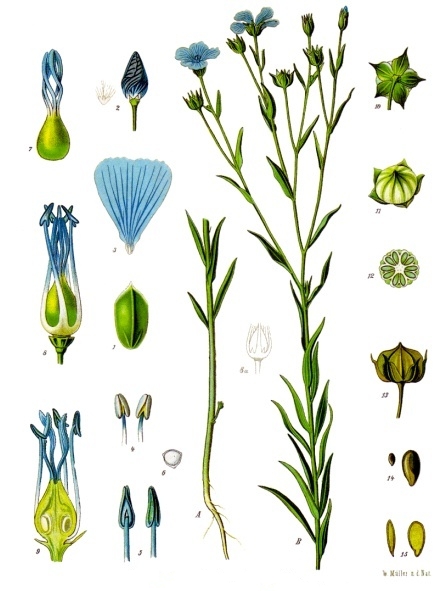
Slender, straight, strong stems that may grow upright or occasionally creep along the ground. Prefers open meadows. Produces 1-inch, fragrance-free blue flowers from late spring to mid-summer. Leaves are green, simple, and arranged alternately (1–3 in long by 1 in wide). Buds develop into brown or copper fruit capsules containing 10 cells and 10 flat seeds.
Can cause contact dermatitis. Stems, leaves, flowers, and sap are considered moderately poisonous to humans; some individuals may also have seed allergies.
Papermaking/Natural Dye Uses and Processes
Paper made from flax pulp is known for its wet-web strength and good tear & fold strength. It has a fiber length of approximately 1-3 mm
Raw Linen: Stalks are harvested, and the seedpods threshed and saved for the next season. Then the stalks are retted for up to two weeks. From here, two distinct methods emerge:
Fabric-Inspired Method: The stalks are retted for several weeks. The outer layer of the retted flax undergoes breaking and is removed. The remaining material is then carded to further separate the fibers.
The Fresh Plant Method: Leaves are removed, and the stems are steamed to strip the fiber directly. Final pulping: Fiber is cooked at least 2 hours in a lye solution. Previously prepared dry fibers must be soaked for 24 hours before being cooked. Thoroughly rinse fibers after cooking until water is clear. Use pH strips to monitor the removal of cooking chemicals. Use proper protective coverings when handling cooking chemicals and solutions. It is recommended to cook outdoors or in very well ventilated area on an electric burner. Whenever preparing paper fibers designate a pot, utensils, and measuring implements solely for fiber cooking. A hollander beater is preferred for pulping, as ball mills often struggle with linen fiber length. The resulting paper naturally ranges from grey to tan, though it can be bleached to a lighter shade during the pulping process.
Method for linen flax, unbleached from purchased supply: Cut into pieces that are 3-6 inches long and wash multiple times, agitating the material in the water. Soak overnight up to 24 hours in clean water. Boil the flax in a solution of water and 20 g lime to 1 liter of water for two hours. Rinse fiber. Beat via a stamper for 2.5 hours and then hollander beat for 30-45 minutes. Rinse fiber before use.
Rag Linen: Linen rags were sorted based on fabric quality and retted for two to five weeks to break down the fibers. By the 19th century, lye and chlorine were introduced to accelerate this stage. The softened rags were pulped by beating and then formed into sheets.
History and Culture
Historically, flax was used as a secondary fiber. It was recycled from rags and textiles rather than extracted directly from the raw plant for paper. "Rag paper" was the standard in the West until the late 19th century. The origins of rags used for papermaking dates back to the late Han Dynasty (947 to 951 ACE) in China.
Women and girls were a major labor force in early Western paper processing, particularly in the collection, inspection, and preparation of rags. As the demand for paper outpaced the supply of rags, manufacturers began experimenting with raw flax and flax straw. Paper made directly from raw flax is often weaker than that made from recycled rags. American papermaking was heavily dependent on imported European rags until the supply was disrupted by World War I. Even as late as 1938, the USDA was still actively researching ways to utilize waste flax straw to stabilize the domestic paper industry. Today it is still a primary material for U.S. currency and archival books.