Garlic
( Allium Sativum )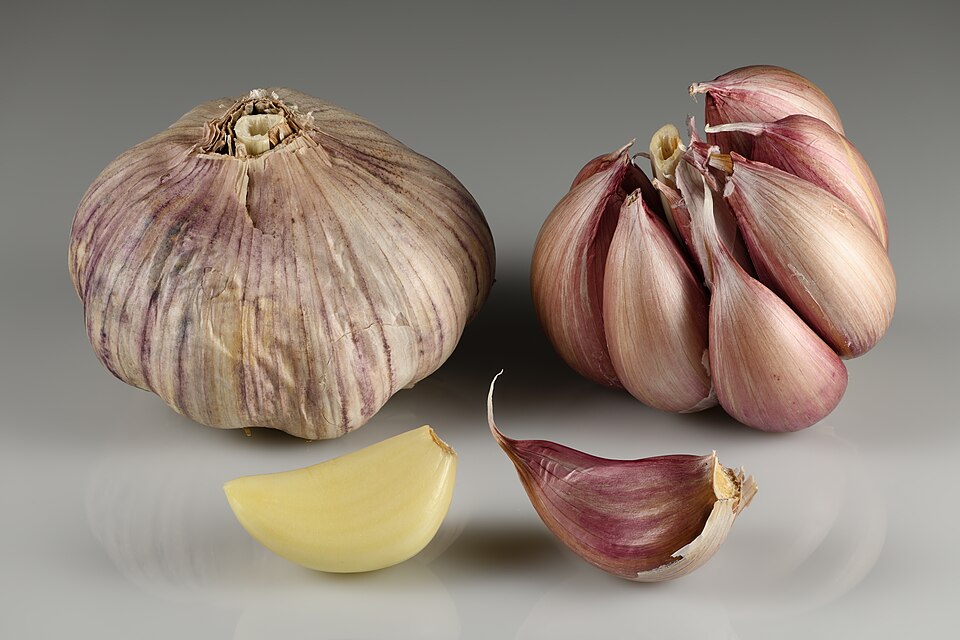
Quick Facts:
Planting and Care
Light: full sun
Soil: moist, well-drained
Garlic grows best in a sunny location with well-drained, moisture-retentive soil that is rich in organic matter. Adding well-rotted manure or compost can help improve soil quality. Although garlic is generally considered pest-free, it can occasionally be affected by insects such as thrips, onion maggots, and wireworms, as well as diseases including botrytis, powdery mildew, pink root, purple blotch, and bulb rot in overly wet soils. Practicing good sanitation and crop rotation can help prevent most pest and disease issues.
Botanical Information
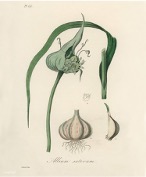
Garlic is classified in the same genus as onion, leek, chive and shallot. It is a bulbous flowering plant with pink to purple flowers and 10-20 cloves in each bulb. Garlic flowers are hermaphroditic.
Papermaking/Natural Dye Uses and Processes
The papery outer skins of garlic bulbs produce soft beige, tan, or pale yellow tones when simmered in water, especially on natural fibers like cotton, wool, or silk. Garlic is also valued for its sulfur compounds, which can help influence how other plant dyes bond to fabric and may subtly alter final colors.
Garlic skins, like onion skins, can be used to make paper. To make paper using garlic skin fiber, collect about 1/4 lb of skins (any color). Bring 3 qts of water to a boil, then dissolve 1.5 tbsp of soda ash and cook the skins for about 40 minutes on medium heat until the fiber can be easily pulled apart. Allow to cool & rinse fiber. Use pH strips to monitor the removal of cooking chemicals. Use proper protective coverings when handling cooking chemicals and solutions. It is recommended to cook outdoors or in very well ventilated area on an electric burner. Fibers can be hand beaten or beaten in a blender with water until pulped. Now the sheets can be formed.
To dye paper with garlic skin dye, pre-treat the paper with mordant (alum or iron oxide) to fix the dye, then coat the paper by dipping, spraying, or painting the dye on and let dry. A second coat of dye can be added to deepen the color. Before coating with dye, add a second coat of mordant.
Whenever preparing paper fibers or natural dyes it is recommended to designate a pot, utensils, and measuring implements solely for fiber cooking & dye purposes. Use proper protective coverings when handling cooking chemicals and solutions. It is recommended to cook outdoors or in very well ventilated area on an electric burner.
History and Culture
Garlic has been valued for thousands of years across many cultures for its culinary, medicinal, and preservative qualities. Evidence shows it was used over 5,000 years ago in Egypt and India, and cloves were even discovered in the tomb of the Egyptian pharaoh Tutankhamun. Ancient Chinese texts indicate garlic was widely used by 2000 BC for cooking, food preservation, and medicine. Although wild garlic once grew across much of Asia, India, Egypt, and parts of Eastern Europe, today it naturally survives mainly in Central Asia without cultivation. In ancient Greece, Hippocrates promoted garlic for cleansing and treating illnesses, while Roman scholar Pliny the Elder recommended it for conditions ranging from digestive disorders to joint disease in his work Naturalis Historia.