Goldenrod
( Solidago Spp. )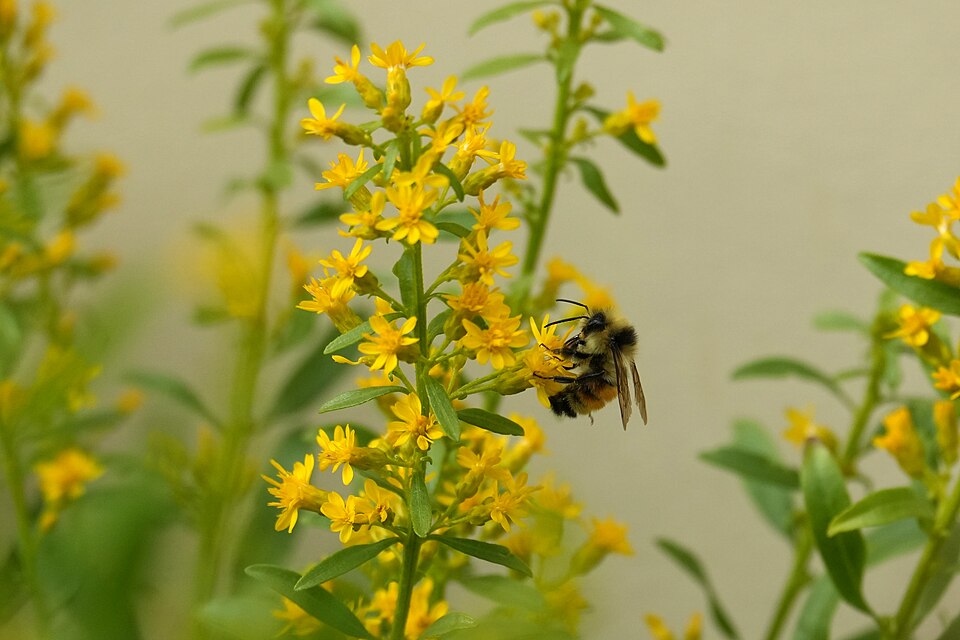
Quick Facts:
Planting and Care
Light: partial to full sun
Soil: well-drained, acidic
Once established, some varieties of goldenrod can spread aggressively from the roots. This can be managed by dividing the plant every few years or by creating a contained patch and controlling spread through mowing or hand-pulling stems that grow outside the intended area.
Botanical Information
Height: <5 ft
Spread: <3 ft
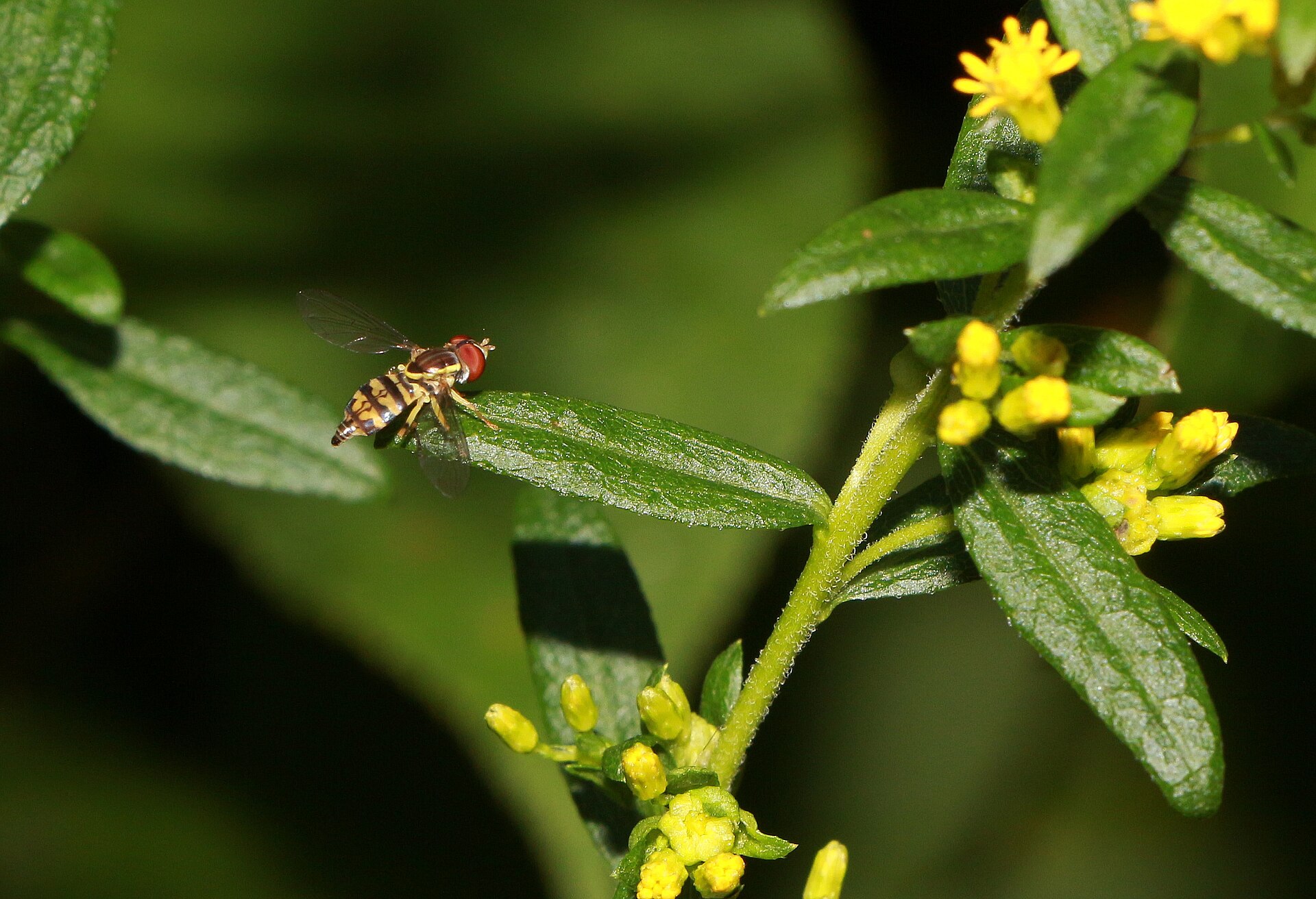
This herbaceous perennial grows on erect stems, sometimes with a woody base, and produces small, bright yellow flowers in dense, wand-like clusters at the tips of arching branches from July through September. Deadheading spent flowers encourages additional blooms. The leaves are simple, alternate, and either entire or serrate, with surfaces that may be smooth or hairy and are frequently scented. Several species produce abundant nectar, attracting a range of pollinators including bees, flies, beetles, wasps, and butterflies, while birds are attracted to the seeds. It is a keystone species in many North American ecosystems. The plant is generally deer-resistant.
It is sometimes confused with ragweed and is incorrectly associated with the wind-borne pollen responsible for allergies and hay fever.
Papermaking/Natural Dye Uses and Processes
Although Showy Goldenrod (Solidago Speciosa) is the most common variety of Goldenrod used for natural dye, several native varieties of Goldenrod can be used for dye, such as Fireworks Goldenrod (Solidago Fireworks), Grey Goldenrod (Solidago Nemoralis) and others. The museum planted Fireworks Goldenrod in the circular planter due to its more compact size.
Goldenrod produces a greenish-yellow dye. Flowers should be harvested when fully open but still fresh, before they begin to brown. Harvesting before the flowers are fully open, or including leaves and stems in the dye pot, will yield a greener shade.
To prepare the dye, remove the flowers from the stems and simmer them for 1 hour. They can be left them to soak for one to two days. After soaking, the dyestuff can be strained and applied to paper by dipping, spraying, or painting. A mordant like alum or iron oxide is used to fix the color, which is usually applied between each coat of dye.
Whenever preparing natural dyes it is recommended to designate a pot, utensils, and measuring implements solely for dye purposes. Use proper protective coverings when handling cooking chemicals and solutions. It is recommended to cook outdoors or in very well ventilated area on an electric burner.
History and Culture
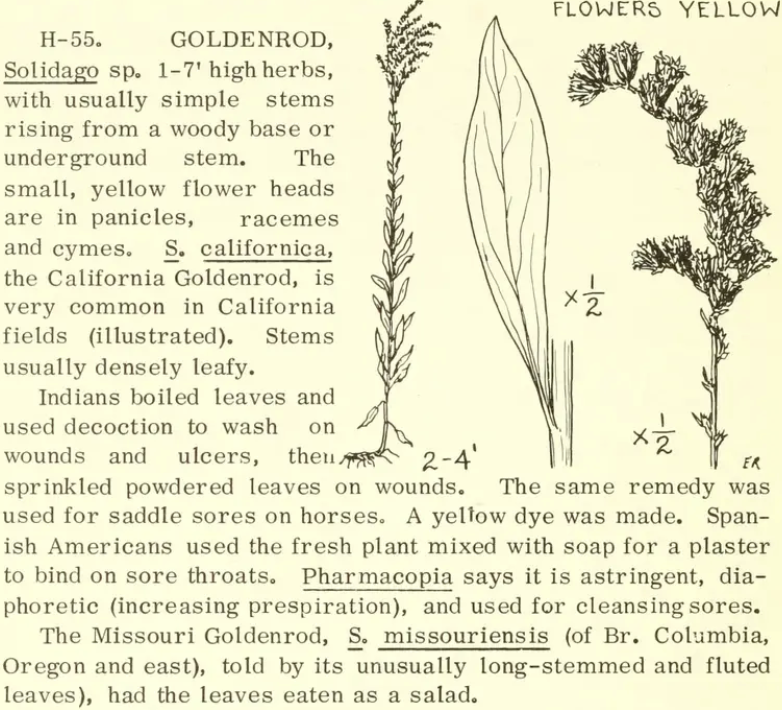
The genus name Solidago derives from the Latin words solidus and ago, meaning "to make whole," a reference to the plant's long-standing reputation for medicinal use. The flowers and leaves have been used for centuries across Eurasia and North America and can be prepared in various forms — including teas, tinctures, syrups, meads, and poultices — for their antimicrobial, wound-healing, diuretic, astringent, and anti-inflammatory properties.