Japanese Indigo
( Persicaria Tinctoria )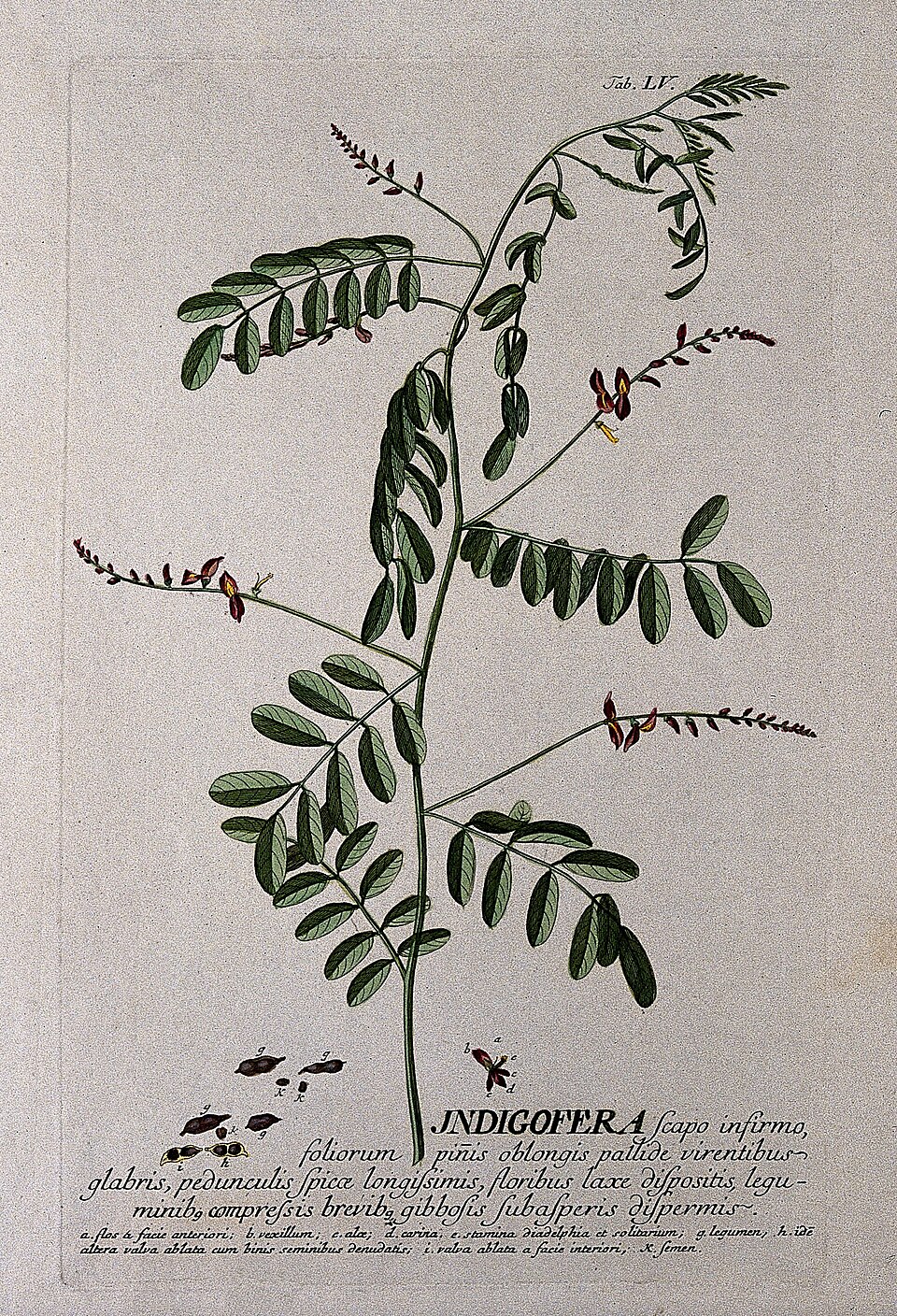
Quick Facts:
Planting and Care
Light: full sun
Soil: well-drained, loamy or sandy
Water: moderate
Botanical Information
Height: 3 ft
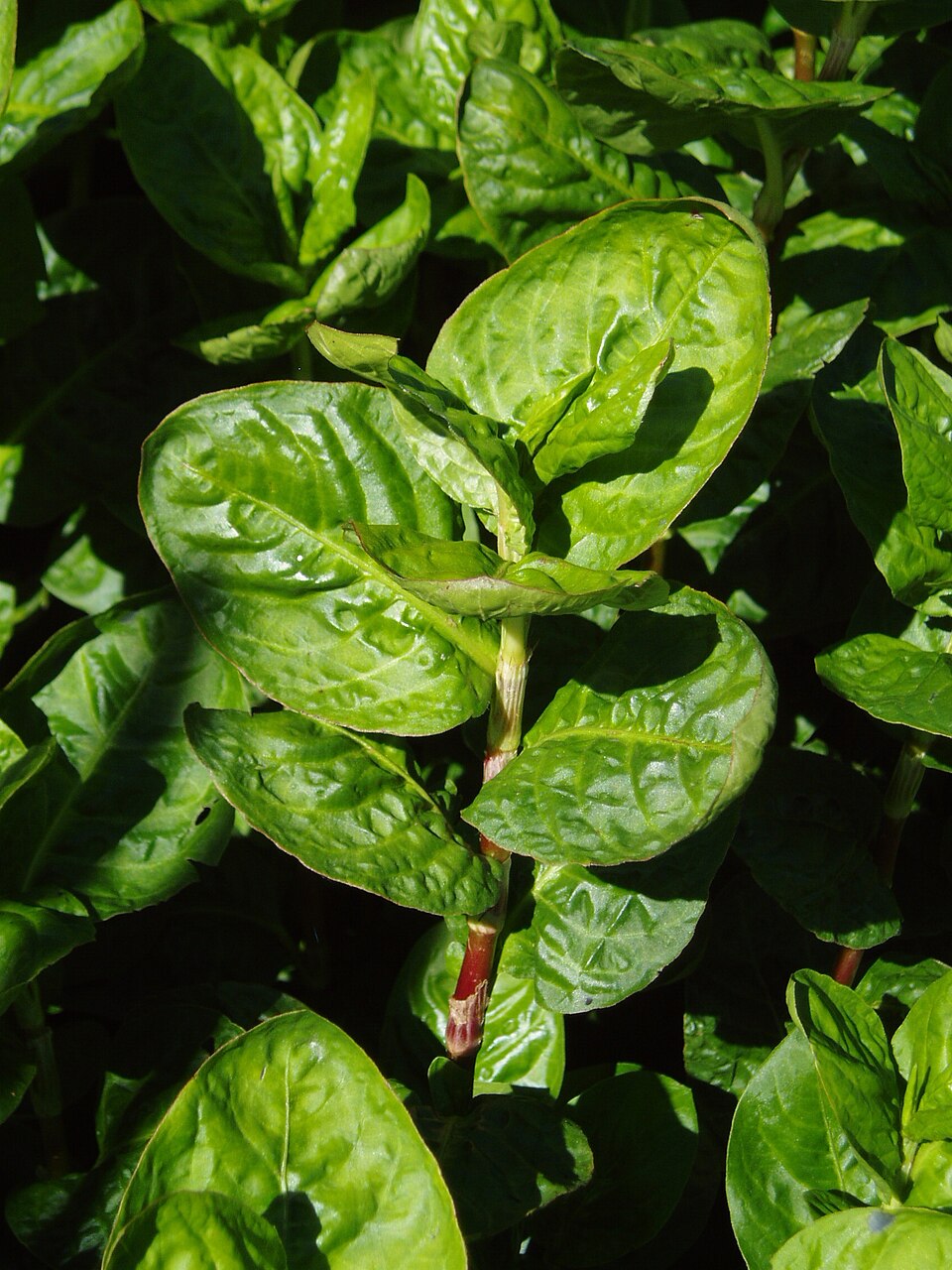
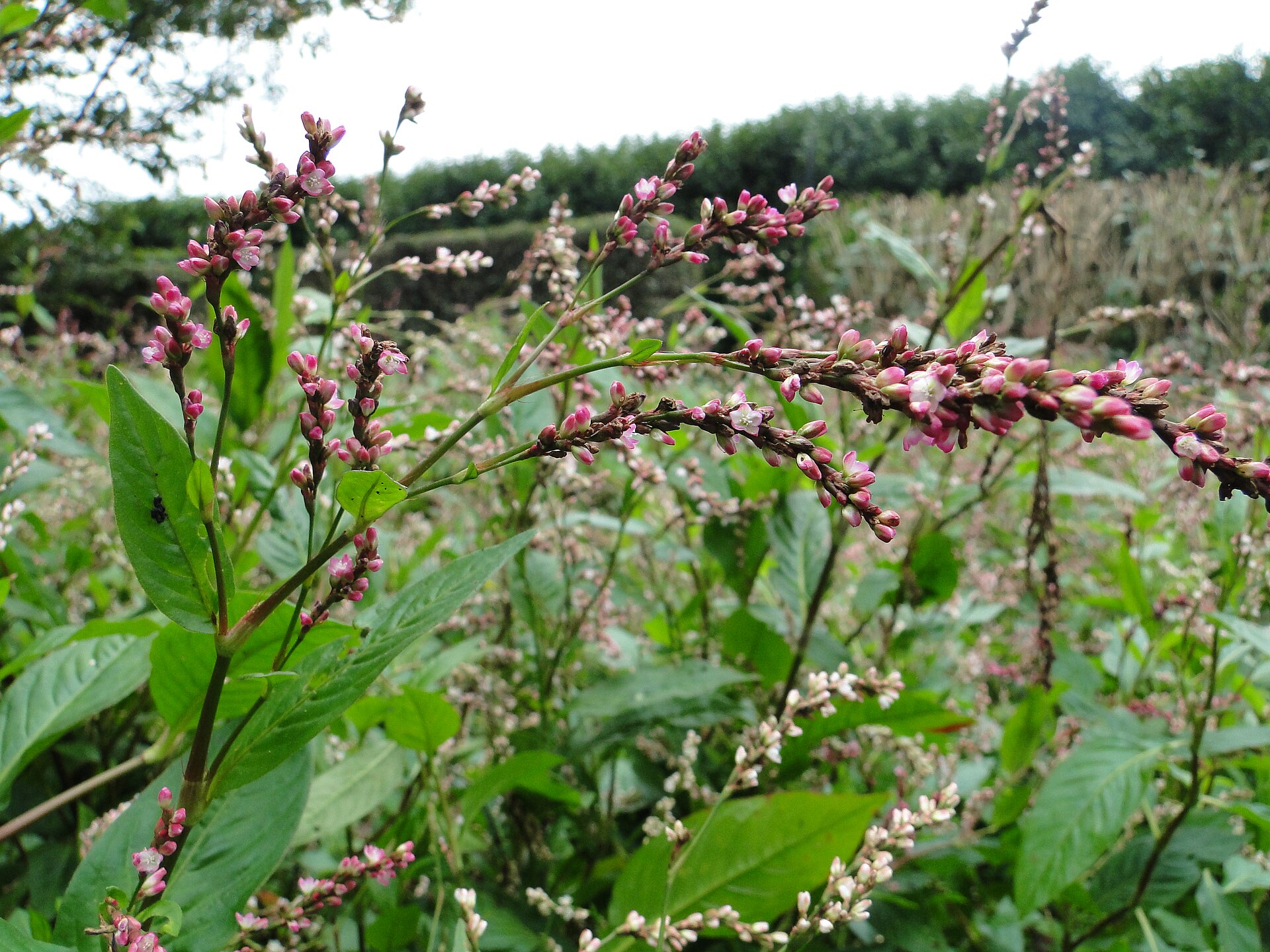
Persicaria tinctoria, also known as Chinese Indigo, Dyer's Knotweed, or Japanese Indigo, is an annual plant in the Buckwheat family (Polygonaceae) native to China and Vietnam. It produces spiked clusters of pink or white flowers from summer through fall, and its leaves vary in shape by variety, ranging from rounded to narrow to crinkled. The plant contains a relatively high indican (a compound in indigo dye) content. It is fast-growing and, under suitable conditions, can typically be harvested six weeks after planting, allowing for two harvests per season.
Leaves: Large, oval to lance-shaped leaves with smooth margins.
Stems: The stems are often reddish, ribbed, and can become slightly hairy.
Flowers: Clusters of tiny, fragrant flowers that can bloom from June to August.
Roots: Its fibrous root system helps the plant anchor itself and supports its growth in various soil types.
Papermaking/Natural Dye Uses and Processes
Indigo powder, or Indigotin is not soluble in water. To use it for dyeing it must be chemically reduced to a water soluble form called indigo white. When paper or fiber is added to an indigo vat (which is yellowish-green in color) and then removed, a molecular combination occurs. The indigo white oxidizes back to the insoluble blue form, where it remains in relative permanence physically bonded to the surface of the fiber or paper.
Indigo dye yields a deep blue color. The dye is best extracted in summer, when the leaves are easier to obtain. When harvesting, larger leaves are best for a greater dye yield. Cut the stems with a sharp tool, leaving several nodes on each stem to allow regrowth.
Different methods exist for preparing an indigo dye vat, or it can be prepared as a pigment for brush dyeing. Some methods use banana mash and lime, others use dates and calcium hydroxide, some use fructose and calcium hydroxide and, still others use ferrous sulphate and calcium hydroxide. Before being added to the vat, Indigo needs to be hydrated by whisk, or mixed in a plastic container with marbles, sealed, and shaken.
Indigo was used as a pigment in pre-Columbian Mayan and Aztec cultures. A recipe for Maya blue pigment, a turquoise blue, is simply 1 part indigo powder to 3 parts fuller's earth. Combine ingredients until homogeneous and heat. As the dry mixture gets hot, the color will change from a greyish-blue to a bright turquoise, then to a deep blue or violet. Sublimation causes the indigo to move into the clay. Remove from heat and let cool, and the color will return to turquoise. Another simple recipe for making indigo into a pigment is to use 1 part indigo powder to 10 parts fresh soy milk, with some guar gum for thickening if needed. Slowly add fresh soy milk to indigo powder and whisk or use marbles in a container to mix. Add 1% guar gum if needed to thicken the consistency and a few drops of essential oil.
A method recommended by Maiwa dye company is prepare a fruit vat. For the vat you will need 75g of natural indigo, 2 kg of mashed overripe bananas (or chopped, pitted dates) and 75g of lime or calcium hydroxide. To prepare a fruit vat: cover mashed bananas (or dates) with water in a pot, bring to a boil and cook for 30 minutes. Let cool and strain the liquid. Next fill a pot (designated for dye use) 3/4 of the way with water and heat it. Add previously prepared banana or date mash, all the indigo, half the amount of lime or calcium hydroxide and stir. Add in the remaining lime or calcium hydroxide. The bubbles from stirring will gather in the middle forming the indigo "flower". Leave the vat to sit for a day or more to let the indigo reduce. The pH of the vat must be 9 in order to remain in reduction. You can test the pH to check reduction, which should be at least nine. For dyeing paper or cellulose, the pH should be between 11–12. The pH can be increased by adding lime 1 tsp at time, or if it is too high banana (or date) juice can be added. The mixture in the vat must be re-heated prior to dyeing and it is recommended to monitor the pH throughout the dying process. The indigo vat will yield stronger shades at the beginning and get lighter the more that it is used. For lighter shades of indigo reduce the amount of indigo used.
Fresh indigo leaf baths yield a light turquoise color. This is accomplished by stripping the leaves from the stems and blending the leaves with ice water until the mixture is bright green and thick but pourable. Once strained, the dye is ready to be applied to paper.
To apply indigo dye to paper, coat the paper by dipping, painting, or spraying the dyestuff and leaving the paper to oxidize in the air. Indigo dye does not require a mordant because rather than chemically bonding, indigo molecules physically bond to the surface of the paper. Whenever preparing natural dyes it is recommended to designate a pot, utensils, and measuring implements solely for dye purposes. Use proper protective coverings when handling cooking chemicals and solutions. It is recommended to cook outdoors or in very well ventilated area on an electric burner.
Many Georgia native varieties of Wild False Indigo, Baptisia spp. can also be used to make a blue dye, however the depth of the shade of blue will be similar to "Prussian Blue" and not the deep tones of Japanese Indigo.
History and Culture
Indigo dyeing is very common among ethnic minorities in Northern Vietnam, especially the Hmong and Dao peoples. Indigo was also being used to color handmade paper in China during the Nan Bei Chao period (Northern and Southern Dynasties 420-589 ACE).
Japanese indigo is one of the main dyes used in the Japanese craft of uchigumo, a style of handmade decorative paper with cloud-like motifs. These cloud designs are created by first saturating the paper with indigo dye, and then beating the paper back into pulp to loosen the indigo particles to create a rich slurry which is then applied to a new sheet of base paper in order to create designs.
In India, colored textiles conveyed different social structures. Darker colors like blue and black were considered inauspicious and therefore typically worn by lower castes. Indian indigo has a much higher dye content in the leaves than any other dye plant, which resulted in large quantities exported to Britain.