Kozo
( Broussonetia Kazinoki )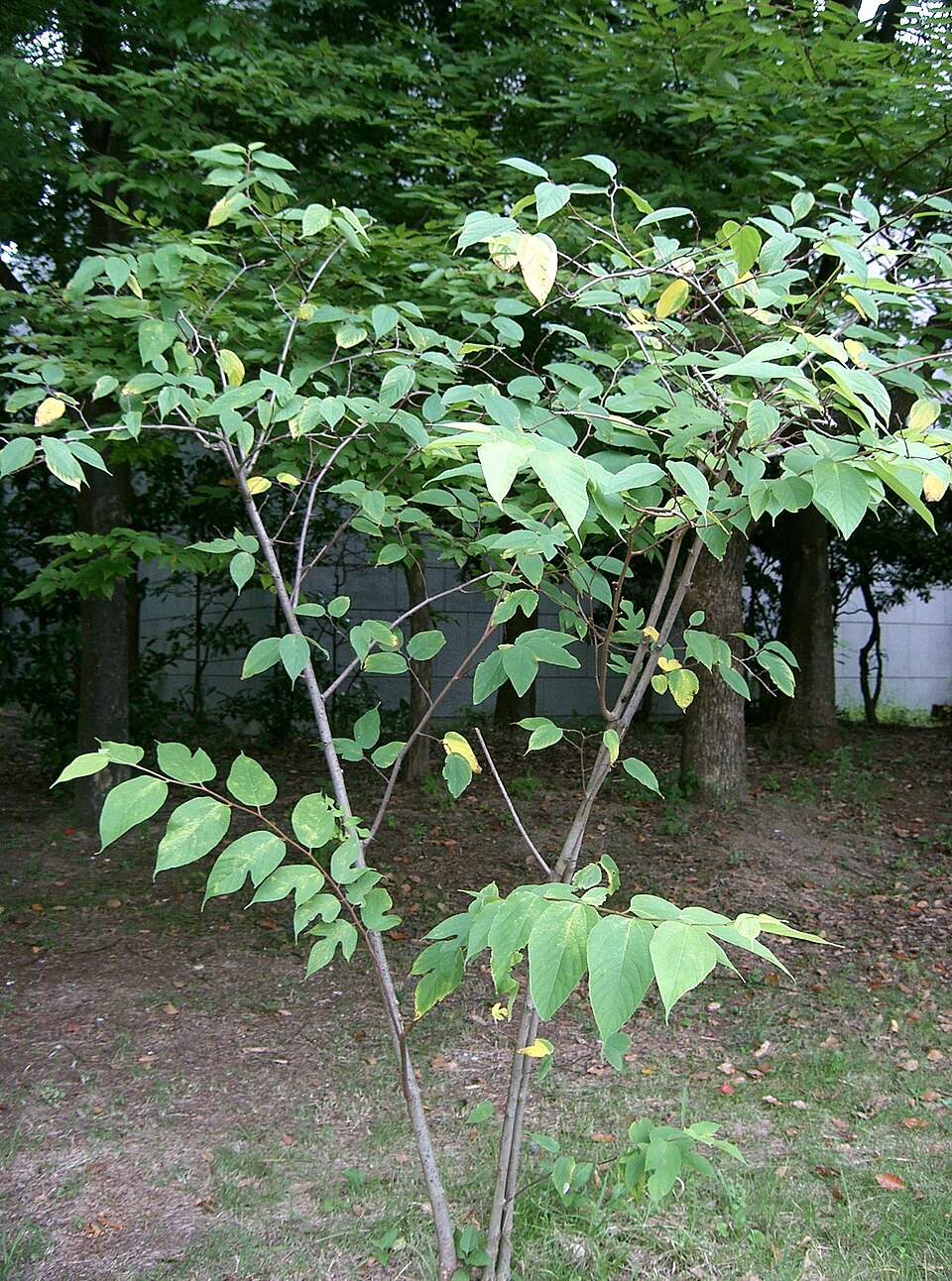
Quick Facts:
Planting and Care
Light: Full sun. Does not tolerate shade.
Water: moderate to high
Soil: Well-drained, mildly acidic to mildly alkaline
Shoots regrow vigorously from stumps in spring, often exceeding 3 ft. in a single season. Plants are pruned to encourage straight stems and leaf growth along branches, improving fiber quality. Leaves drop in winter. Stems are typically harvested in December–January before snowfall. Propagation from seed takes 1–3 months to germinate.
Botanical Information
Height: 8–15 ft
Spread: 8 ft
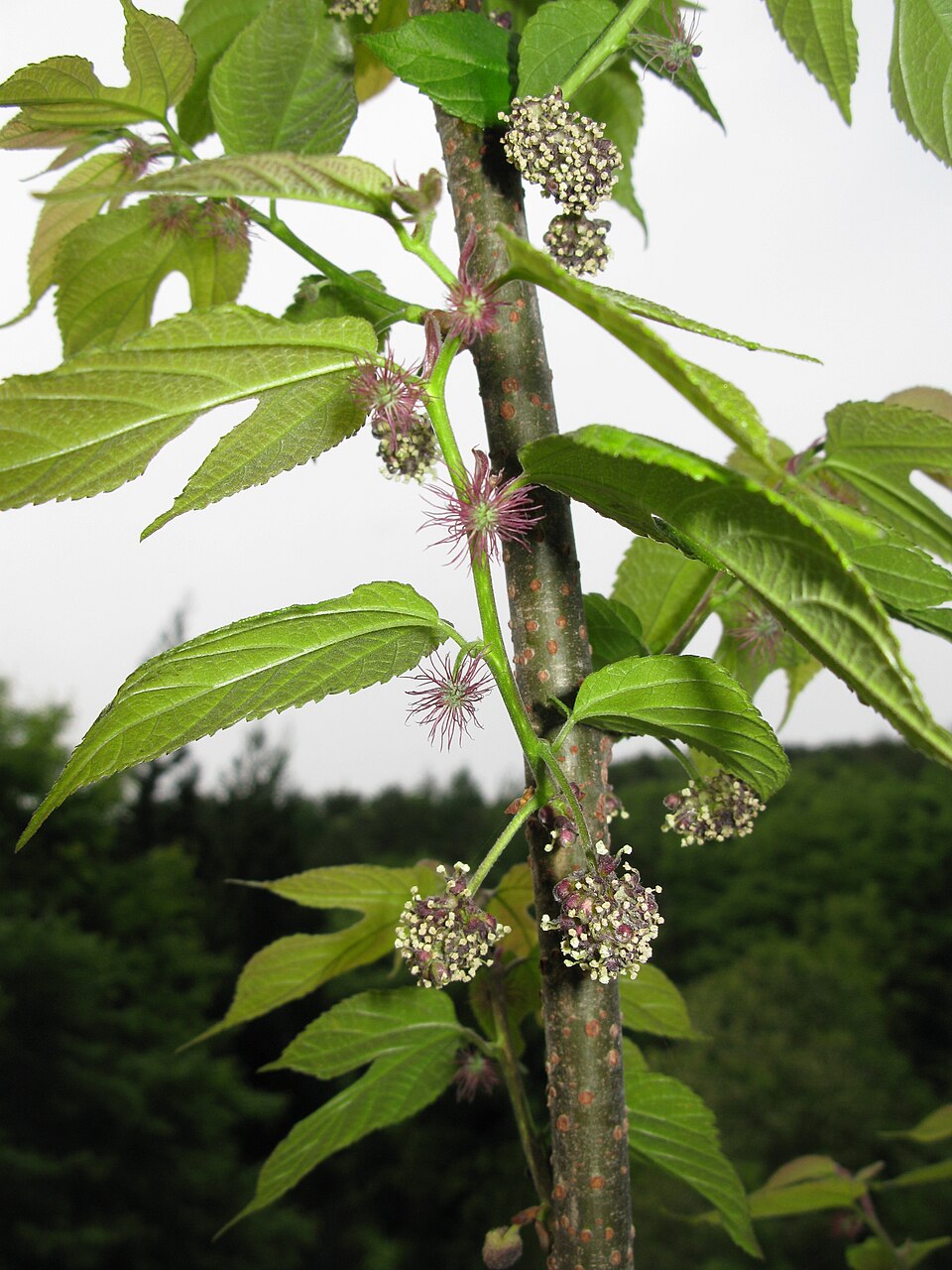
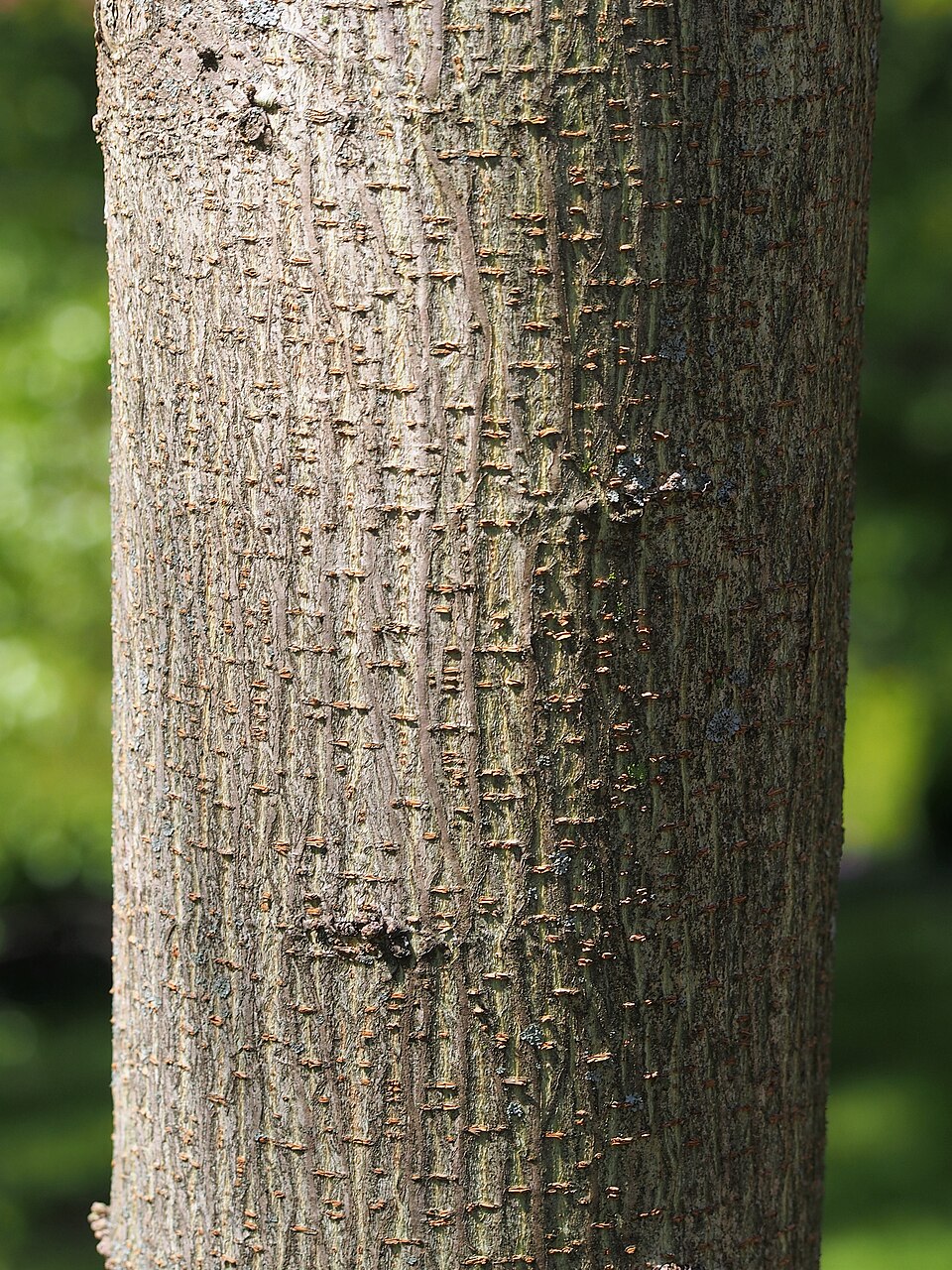
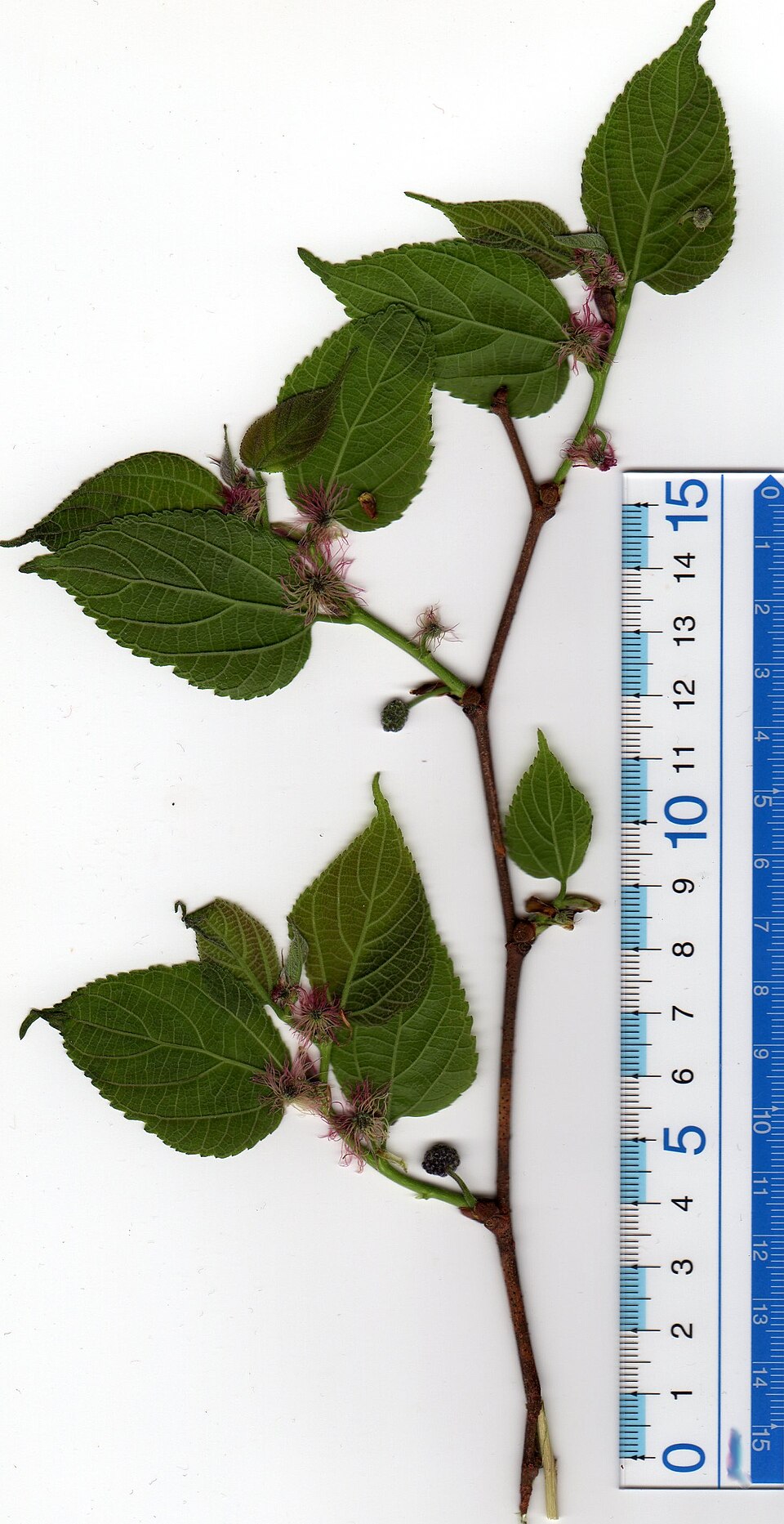
Grows on low mountains and forest margins. Low risk of extinction, though threatened by habitat loss and deforestation. A hybrid of hime kozo (Broussonetia kazinoki) and kajinoki (Broussonetia papyrifera). Produces purple-tinged young branches and rough, ovate leaves (3–7 cm). Plants may be male, female, or mixed, but are not self-fertile. Flowers in August; fruit ripens in September. Fruits are small, round, and edible with a sweet flesh. Leaves are also edible when cooked. Related to Gampi. Kozo is cultivated rather than wild-harvested.
Papermaking/Natural Dye Uses and Processes
Kozo is a primary bast fiber used in traditional Japanese papermaking due to its long, strong cellulose fibers.
Branches are harvested annually in the fall, dried, and steamed to separate bark from woody core. The outer bark contains usable fiber, while inner wood is discarded. The outer bark can also be removed in late spring/ early summer. If fresh, a circular cut is made at the branch top and bottom with one long cut down the length of the branch. The bark is lifted up at the lengthwise cut and then peeled from the branch. Then the outer bark is peeled from the woody core. Bark is sorted by quality depending on its position. The white inner layer (shirokawa) produces the highest-quality paper, while mixed or outer layers produce lower grades.
Fiber Processing: After harvesting, bark is soaked, scraped (to remove outer brown & green layers), and cooked in an alkaline solution to remove non-cellulose materials. Traditional processes use wood ash, while modern methods may use stronger or other alkalis for efficiency. It can also be cooked for 2 hours with lye or 4+ with soda ash until the fibers are soft and pull apart easily. PH strips can be used to monitor the removal of cooking chemical. Use proper protective coverings when handling cooking chemicals and solutions. Recommended to cook outdoors or in very well ventilated area on an electric burner. Whenever preparing paper fibers designate a pot, utensils and measuring implements solely for fiber cooking. Fibers are then rinsed multiple times until the water is clear, hand-cleaned, and beaten into pulp. Beat for 20-40 minutes by hand, beaten for 30 minutes in a naginata, or cut into 1x1 inch pieces and beaten in a hollander for 15-30 minutes
Formed sheets are pressed and air-dried or heat-dried; rapid industrial drying produces weaker paper compared to traditional sun drying. Kozo paper made in the Asian style consists of multiple thin layers of pulp in the Sugeta, combining strength, thickness, and surface finish.
History and Culture
Kozo papermaking was introduced to Japan in 610 CE and quickly supported by the Imperial court. Its abundance made it the dominant fiber for centuries before gampi and mitsumata were introduced. Regions such as Ibaraki and Kochi Prefectures remain known for cultivation, though much modern kozo is now imported from Paraguay, China, and Thailand. Paraguayan kozo is often preferred for its similarity to Japanese-grown fiber due to comparable climate conditions affecting resin content.