Mitsumata, Paperbush
( Edgeworthia papyrifera/ Edgworthia Chrysantha )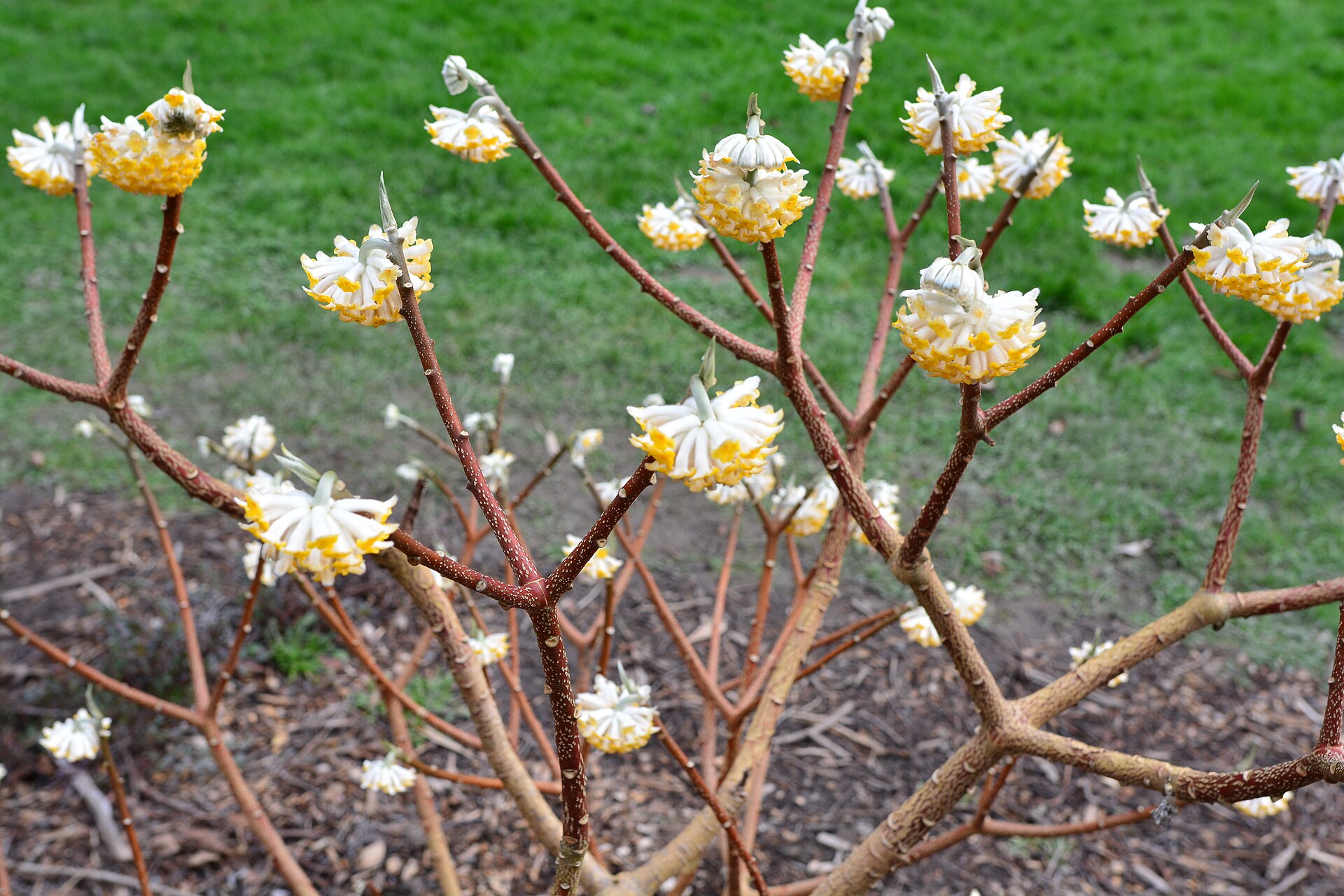
Quick Facts:
Planting and Care
Light: artial shade to full sun. Requires protection from hot afternoon sun.
Water: Not tolerant of hot, dry summers.
Soil: Moist, well-drained, humus-rich soil
Can be cultivated annually, unlike wild-harvested fibers such as Gampi. Harvest occurs every three years between November and January after leaf drop. No significant pest or disease issues.
Botanical Information
Height: 3-6 ft
Spread: 3-6 ft
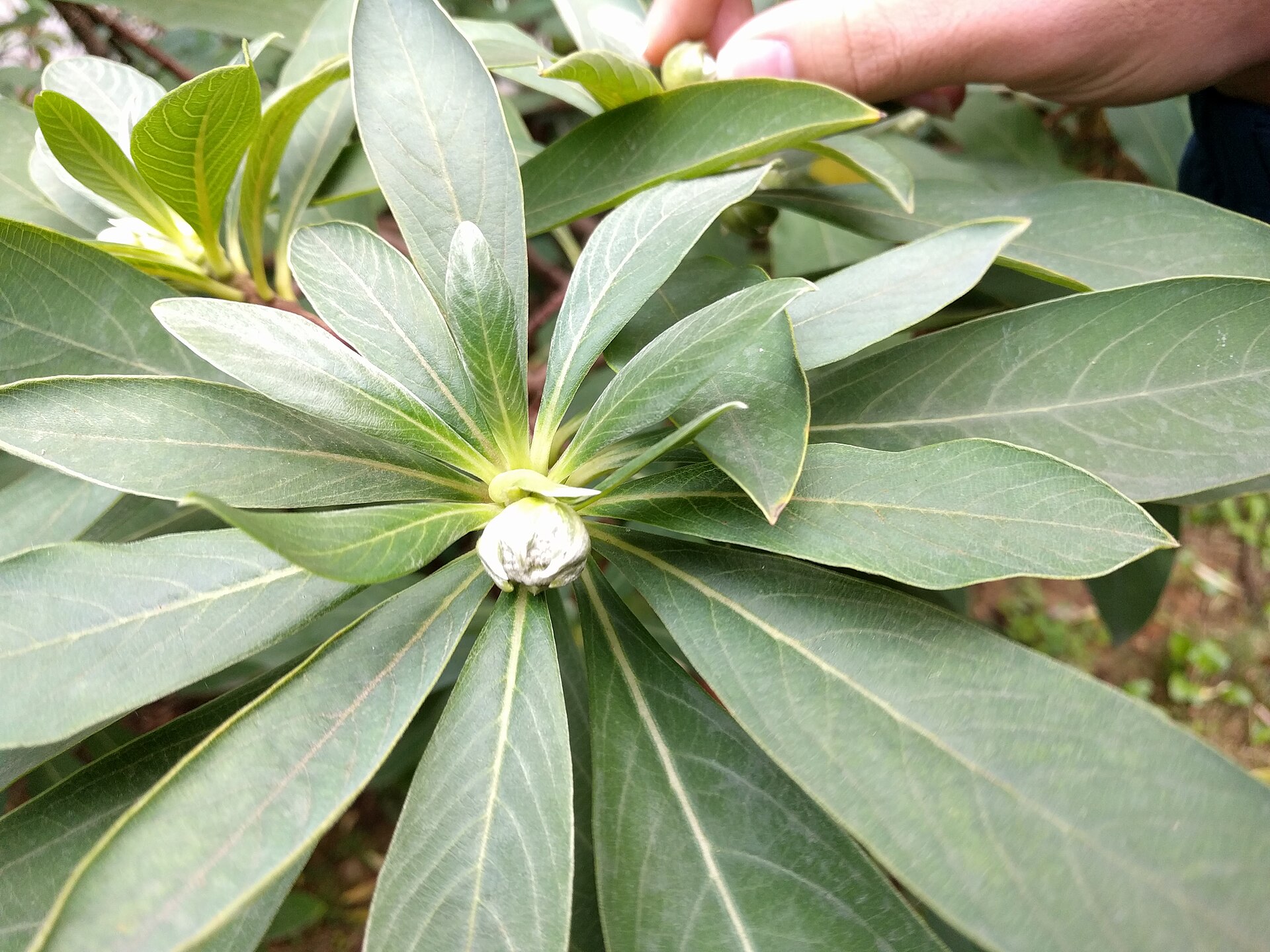
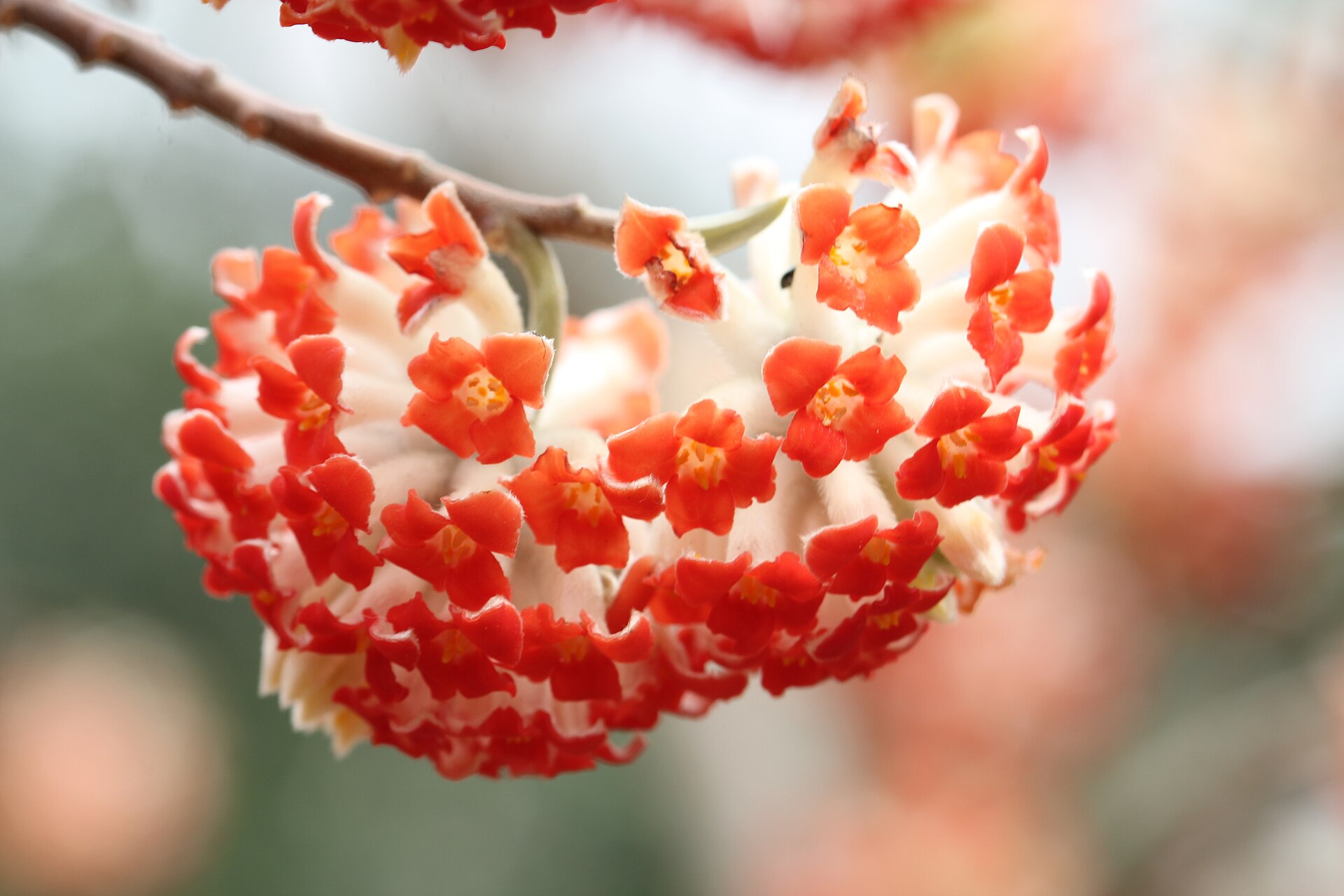
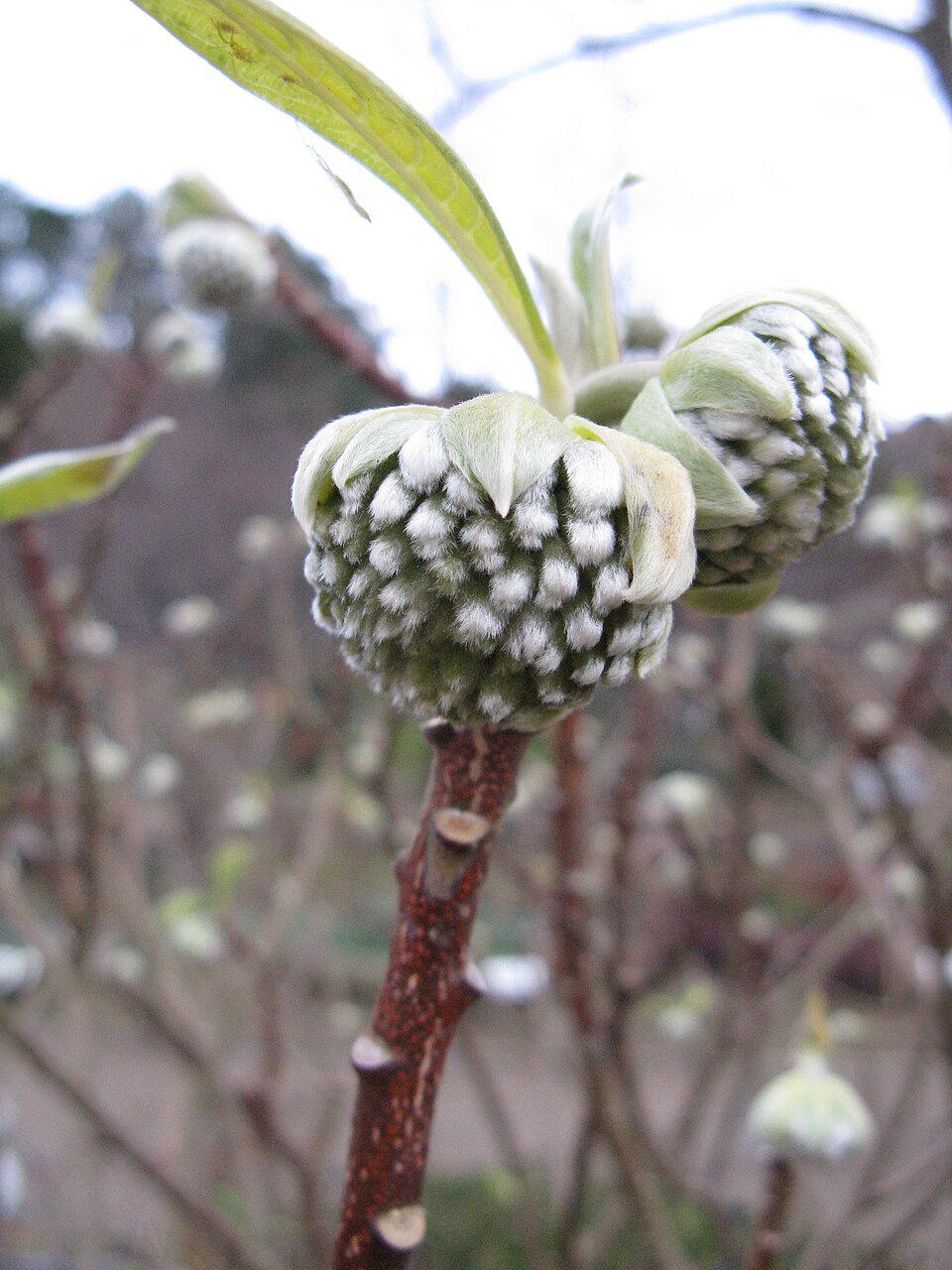
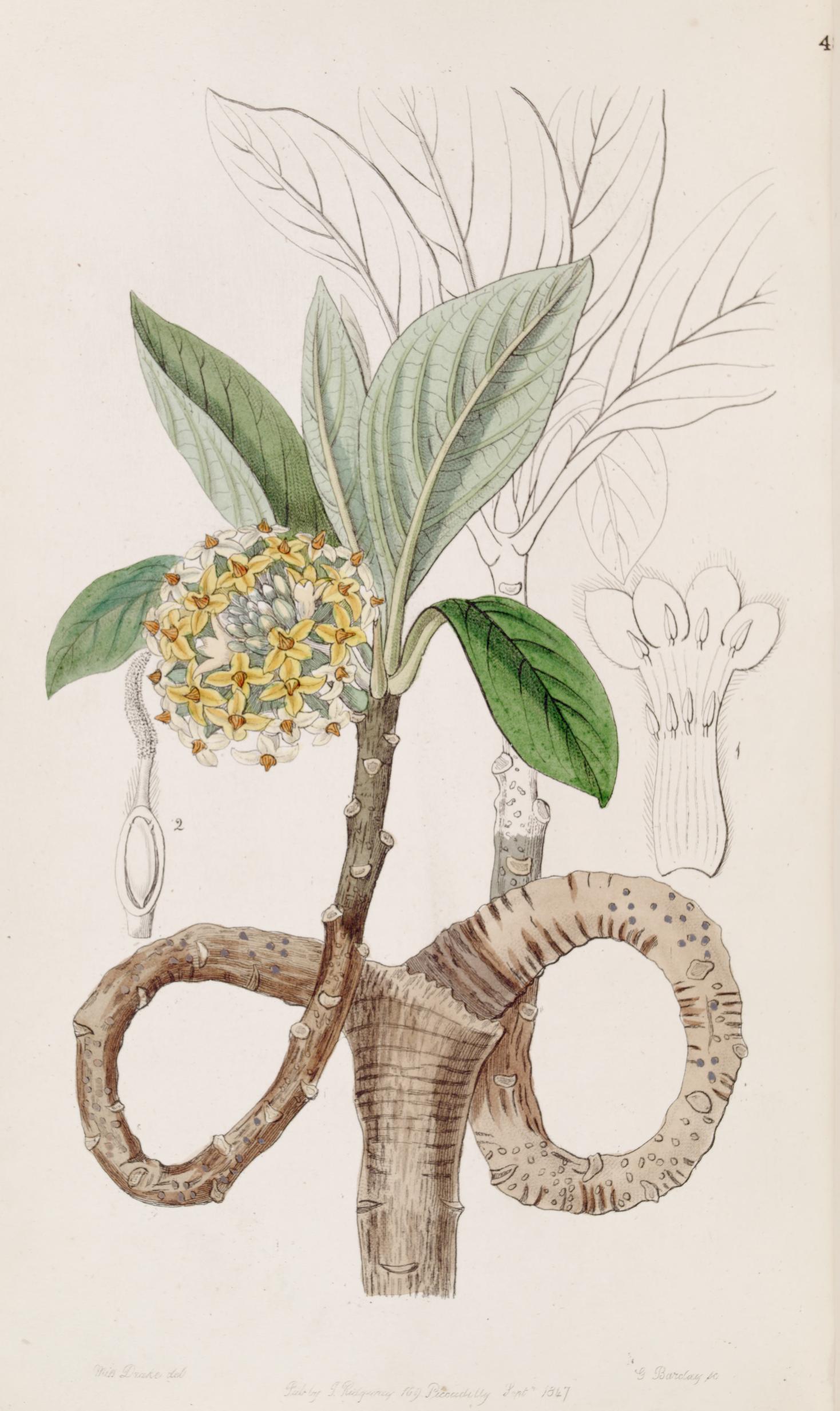
Produces showy, fragrant yellow flowers in compact clusters from late February to early April. Buds form in summer and overwinter before blooming. Leaves are dark green, 3–5 in long, with short stalks and brown branchlets. Young leaves are covered in fine white hairs. Leaves drop before flowering. Fruits are dry drupes.
Introduced to the southeastern United States after 1908 and has naturalized in some areas, including parts of Georgia such as Rabun County.
Papermaking/Natural Dye Uses and Processes
Mitsumata fibers are long (approximately 3–12 mm), producing paper that is strong yet softer and more lustrous than kozo papers. The paper is light brown/off white, but the pulp extraction process impacts the resulting shade, with higher heats and stronger alkaline solutions producing darker paper. Harvest timing affects quality. Bark collected in late autumn or early spring produces the highest-grade paper, while later harvests may yield higher retention but lower quality.
Fiber Processing: Dried branches are steamed, and bark is stripped and peeled. If fresh, a circular cut is made at the branch top and bottom with one long cut down the length of the branch. The bark is lifted up at the lengthwise cut and then peeled from the branch. Then the outer bark is peeled from the woody core. Next the outer bark is removed to expose the white inner fiber layer by scraping or peeling. If bark is dry soak 24 hours prior to cooking. Fiber is then cooked in a mild alkaline solution to remove pectin and non-cellulose materials. often cooked in 15-20 percent soda cook for 2 or more hours. Recommended to cook outdoors or in very well ventilated area on an electric burner. Fibers are rinsed multiple times until water is clear and hand processed before being beaten into pulp. PH strips can be used to monitor the removal of cooking chemical. Use proper protective coverings when handling cooking chemicals and solutions. Whenever preparing paper fibers designate a pot, utensils and measuring implements solely for fiber cooking.
Fibers are then rinsed multiple times until the water is clear, hand-cleaned, and beaten into pulp. Beat for 20-40 minutes by hand, beaten for 30 minutes in a naginata, or cut into 1x1 inch pieces and beaten in a Hollander for 15-30 minutes.
History and Culture
Introduced to Japan from China during the late Muromachi period (1337–1573.) and not widely used for papermaking until the Edo period (1603–1868). Historically considered a “feminine” fiber due to its softness, shorter fiber length, and smoother texture compared to Kozo. Today, Mitsumata fiber is largely imported from China, though it remains essential in traditional Japanese papermaking, including its use in banknote production.