Onion
( Allium Cepa )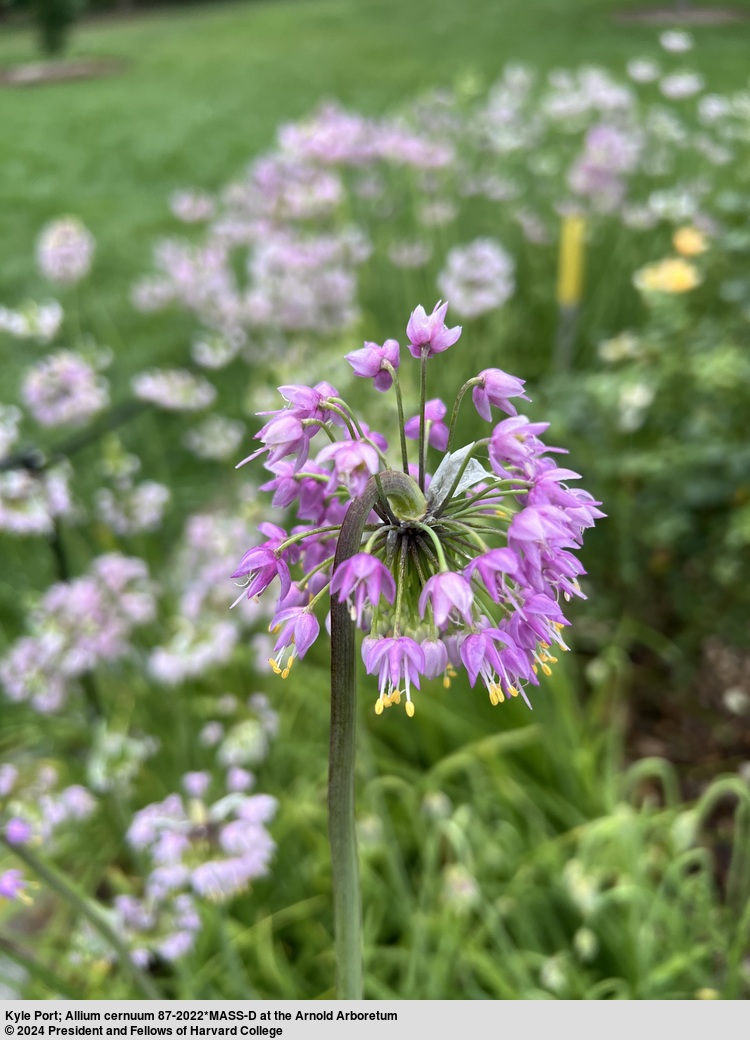
Quick Facts:
Planting and Care
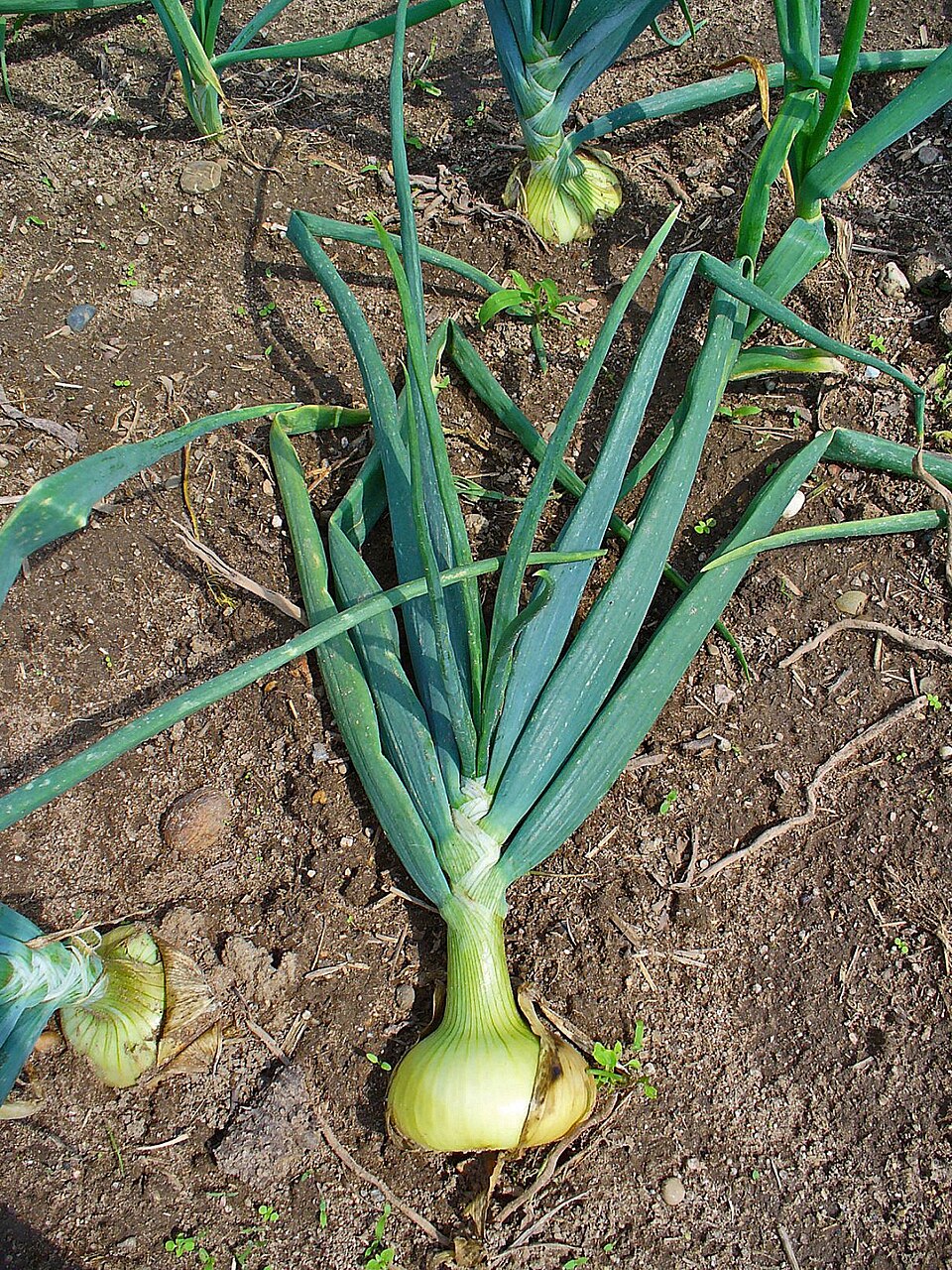
Plant as sets (bulblets) in early spring as soon as ground can be worked, about 6" apart in rows 8" apart with ½ to 1" covering of soil. Give room to grow as each bulblet will become a whole clump. They prefer well-drained, sandy and limey soil.
Onions are susceptible to number of pests and diseases. Diseases include botrytis, purple blotch, downy mildew, neck rot, soft rot, onion smut and viruses such as onion yellow dwarf and iris yellow spot. Common pests include onion thrips, allium leaf miner and onion fly (also known as onion maggot).
Botanical Information
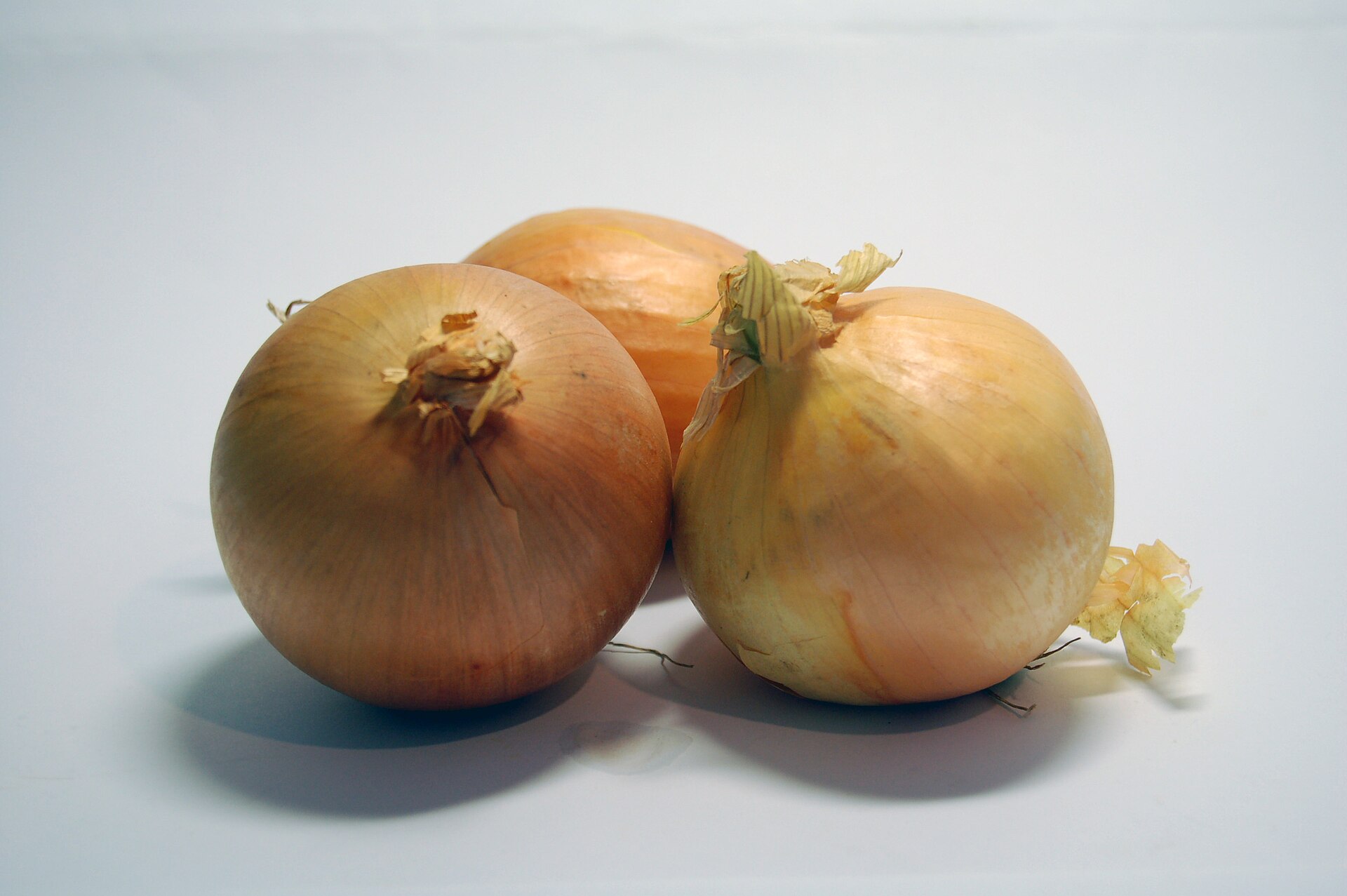
Allium cepa, commonly called onion. This is a cultivated vegetable of great antiquity.
Papermaking/Natural Dye Uses and Processes
While the dye colors produced are slightly different, depending on the variety of onion used and other compounds found in the skins, the primary dye component is called pelargonidin (3, 5, 7, 4 tetrahydroxy antocyanidol). White onions will produce orange tones (deep yellow to pumpkin orange), while red onions produce a reddish brown. It is important to keep each color of onion separate when dyeing, as mixing white and red skins will yield a dull, muddy brown.
To make onion skin dye, you will need about 20% weight of fiber. Simmer the skins for about 1 hour, then let cool. Once cooled for a few hours, strain the dye through a colander lined with muslin or cheesecloth, and discard the skins. Coat the paper either by dipping, spraying, or painting the dye on and then let dry. Onion skins contain tannic acid, which acts as a natural mordant, so adding a mordant is not necessary, but can improve color fastness. For cellulose, mordant with tannin at 8% weight of fiber and then either alum at 15% or aluminum acetate at 8%.
To make paper using onion skin fiber, collect about 1/4 lb. of skins (any color). Bring 3qts of water to a boil, then dissolve 1.5 tbsp of soda ash and cook the skins for about 40 minutes on medium heat until the fiber can be easily pulled apart. Allow to cool & rinse fiber. PH strips can be used to monitor the removal of cooking chemical. Use proper protective coverings when handling cooking chemicals and solutions. Recommended to cook outdoors or in very well ventilated area on an electric burner. Can be hand beaten or beaten in a blender with water until pulped. Now the sheets can be formed.
Whenever preparing paper fibers or natural dyes it is recommended to designate a pot, utensils and measuring implements solely for fiber cooking & dye purposes. Use proper protective coverings when handling cooking chemicals and solutions. Recommended to cook outdoors or in very well ventilated area on an electric burner.
History and Culture
Onions have a long cultivated history, with tomb paintings from both the Old and New Kingdoms of ancient Egypt depicting them growing in the field. They were likely spread by traders to India, Persia, Egypt, and the Mediterranean region. The ancient Greeks gave shallots their name after encountering them in the Palestinian port of Ashkalon (present-day Ashkelon, Israel), naming them after the city. Shallots were subsequently introduced to Europe by crusaders returning from the Middle East in the 11th century.