Sisal
( Agave Sisalana )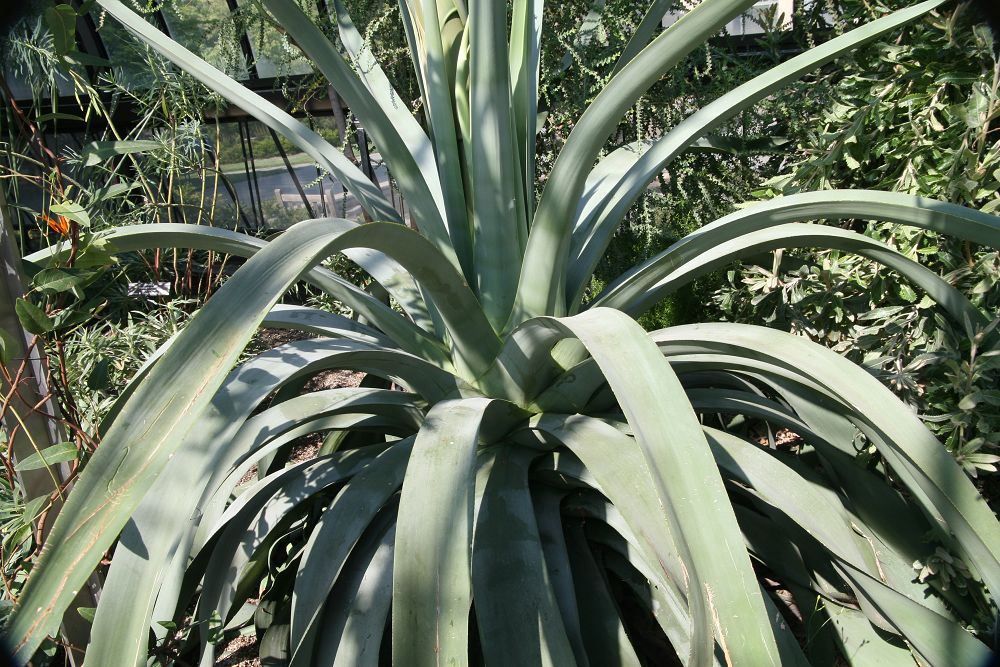
Quick Facts:
Planting and Care
Light: Full sun to partial shade.
Soil: Prefers well-drained sandy loam or heavy clay; adaptable to poor, rocky, mildly acidic or alkaline soils.
Water: Extremely drought-tolerant; supplemental irrigation improves health but is not required.
Space plants 2m x 1m. Lower leaves can be "pineappled" (removed) before planting to manage space. Roots are shallow, rarely exceeding 35 cm. Generally hardy; susceptible to rot if soil is not well-drained.
Botanical Information
Height: 4-8 ft
Spread: 6-12 ft
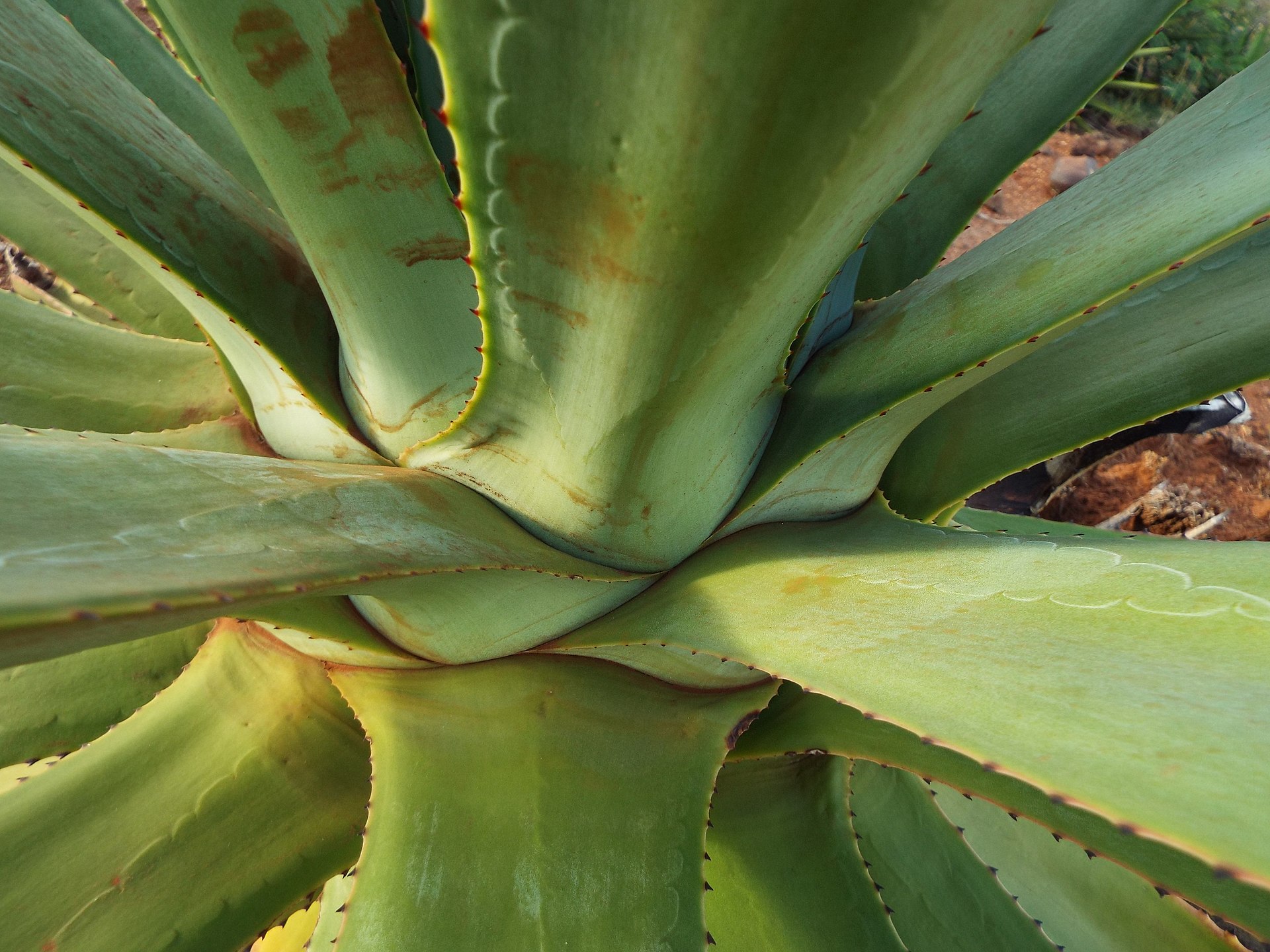
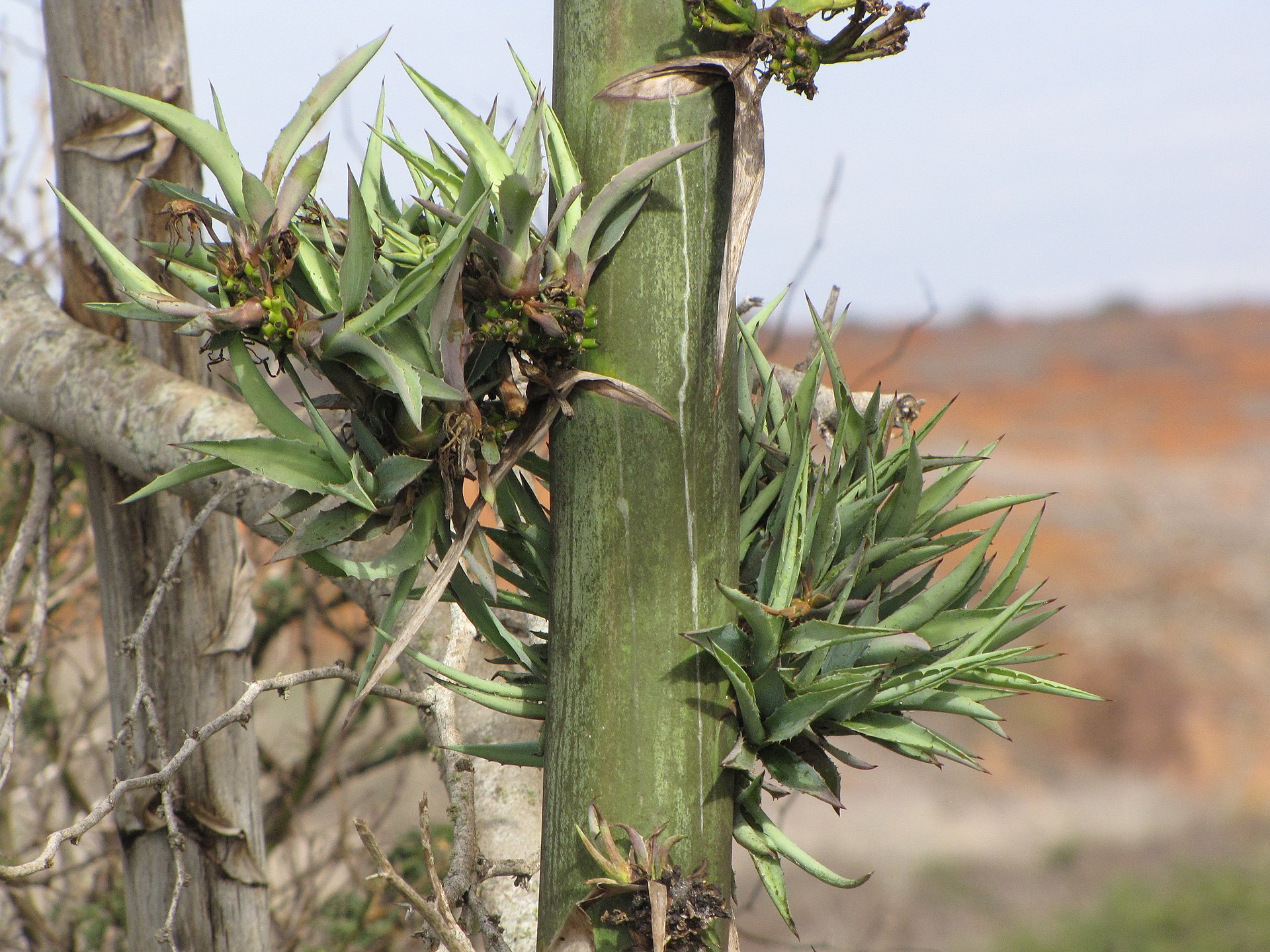
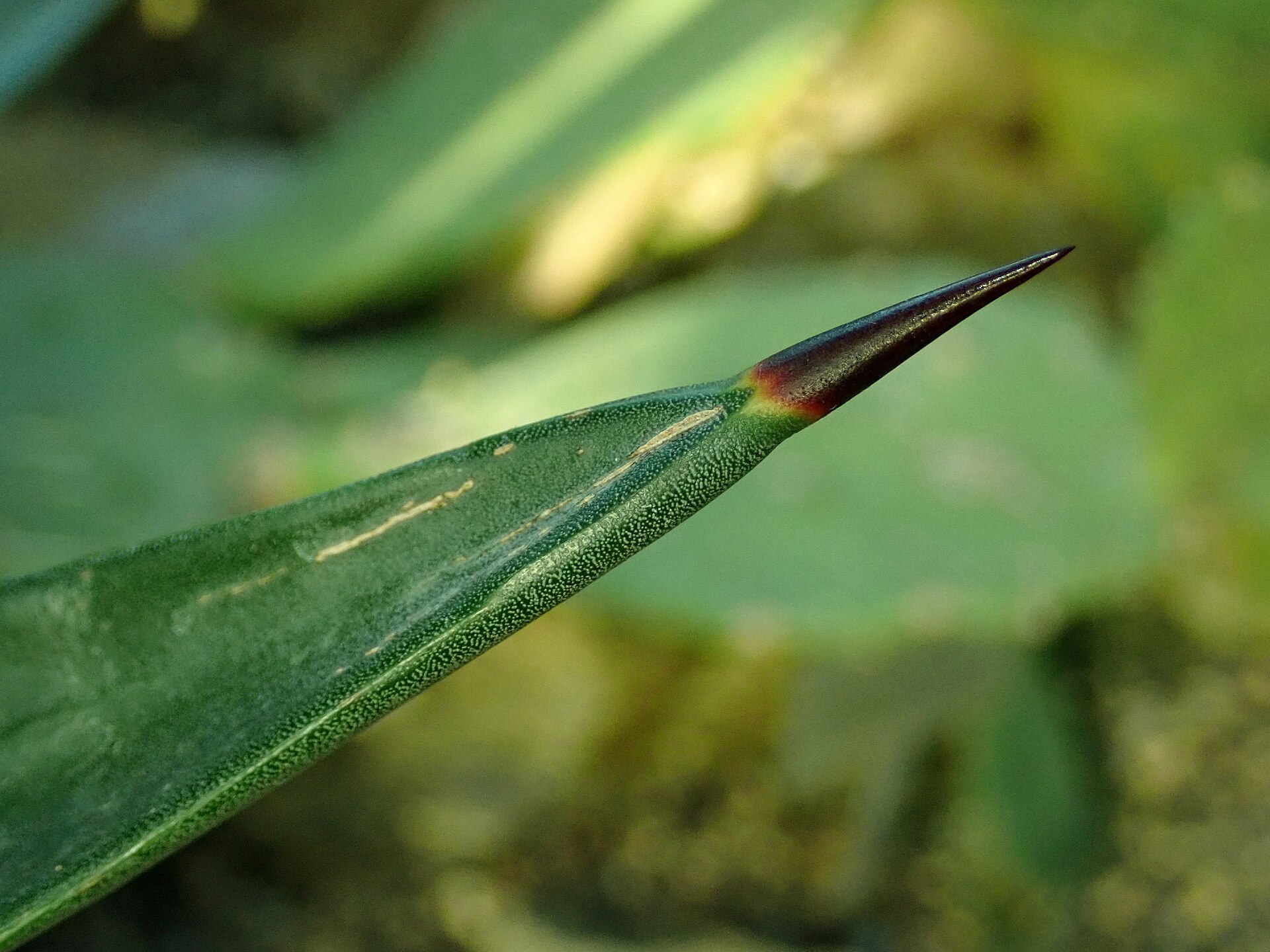
A fast-growing succulent forming a dense rosette of sword-shaped, dark green leaves (up to 120 cm long). Leaves are protected by a waxy cuticle and tipped with terminal spines. Sisal is monocarpic, living 7–10 years before sending up a 6-meter terminal panicle of green-yellow flowers, after which the bloomed-out head dies It propagates via rhizomes, stolons, and "bulbils" (seeds that germinate while still attached to the parent). Sharp leaf tips (spines) can cause puncture wounds. The sap is toxic and can cause skin irritation during pruning.
Papermaking/Natural Dye Uses and Processes
Sisal is a commercial leaf fiber, prized for its high cellulose content, mechanical strength, and flexibility.
Initial harvest occurs 2–4 years after planting. Mature leaves closest to the ground yield the longest, coarsest fibers. Fibers from the base of leaves are shorter and fiber length extends closer to the top. The outer cuticle is removed to expose the fibers. This may be achieved by hand-scraping with a knife or using a raspador machine. Small raspadors can process up to 12 leaves a minute. Fibers can be retted. Retting involves soaking fibers in water for 7–21 days to remove resins and plant pulp. This process may be sped up by removing outer cuticle first. Cleaned fibers are washed and sun-dried, which naturally whitens them. Fresh or dry fibers should be pre-soaked in water 24 hours before cooking.
Cook fibers in an alkaline solution (soda ash, lye, or lime) for about 2 hours. Rinse fiber until water is clear before cooking. PH strips can be used to monitor the removal of cooking chemical. Use proper protective coverings when handling cooking chemicals and solutions. Recommended to cook outdoors or in very well ventilated area on an electric burner. Whenever preparing paper fibers designate a pot, utensils and measuring implements solely for fiber cooking. Fiber can be ball-milled for 3-4 hours, or beaten in a Hollander.
Produces paper with high tear resistance, porosity, and absorbency. It absorbs dyes exceptionally well.
History and Culture
Traditionally used in the treatment of jaundice and fiber for fabric and rope. The sharp leaf spines were used for needles. Named after the ancient port of Sisal in Yucatan, Mexico. It was a regional monopoly until the early 20th century.In 1833, US Consul Henry Perrine sent samples to Florida, with the goal of commercial cultivation. Under experimentation by the Tropical Plant Company, A. sisalana thrived and became naturalized in Florida. Mexico and the US were the primary exporters of A. sisalana bulbs to Africa and Asia. Today, sisal accounts for roughly 70% of the world’s leaf fiber production, with major cultivation centers in Brazil, Tanzania, and Kenya. It is used for reinforcement in bio-composites, cordage, carpets, bags, and footwear. Plants produce 200-250 commercially viable leaves over a lifetime.