Yucca
( Yucca Filamentosa )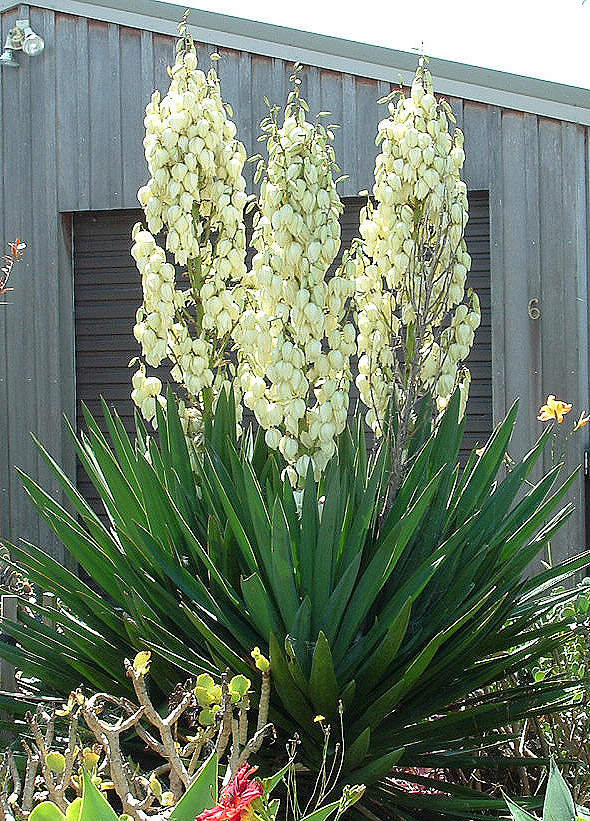
Quick Facts:
Planting and Care
Light: Full sun (at least 6 hours); highly heat and light tolerant.
Soil: Prefers well-drained, sandy, or rocky soil; highly tolerant of poor, shallow, or urban soils.
Water: Very low water needs; extremely drought-tolerant.
Best propagated by dividing small clumps/rhizome offshoots.
Seeds sprout easily; young plants grow at a medium rate. Plant 1 meter apart. Difficult to remove once established due to deep rhizomes; consider containers for temporary sites. Virtually pest-free; susceptible to leaf spot or blight in high-humidity/poor-drainage conditions. Roots are sensitive to rot in low-drainage or soggy areas.
Botanical Information
Height: 3-4 ft
Spread: 4 ft
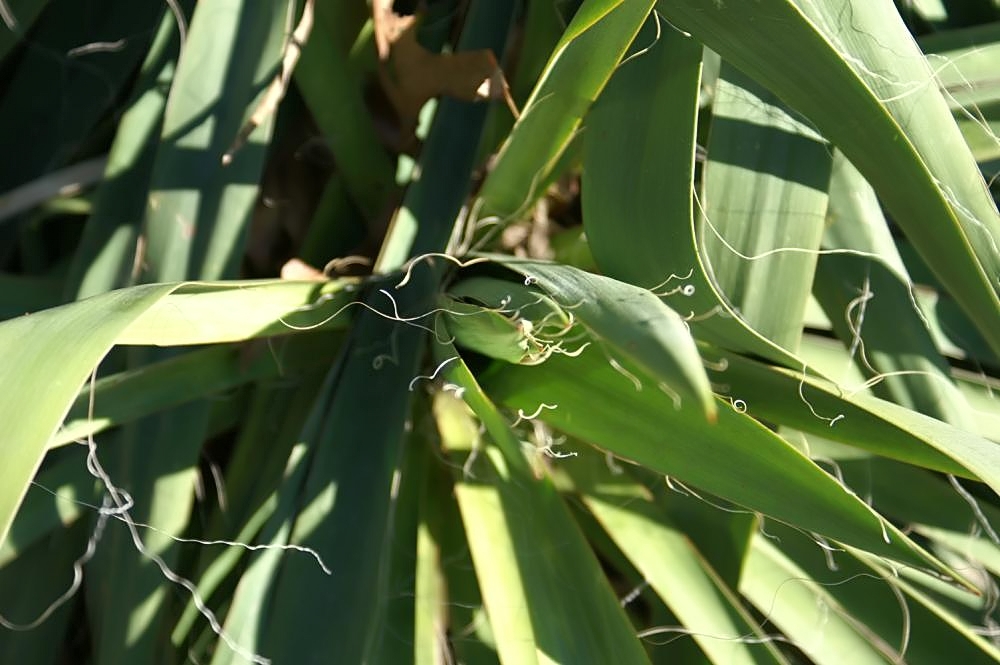
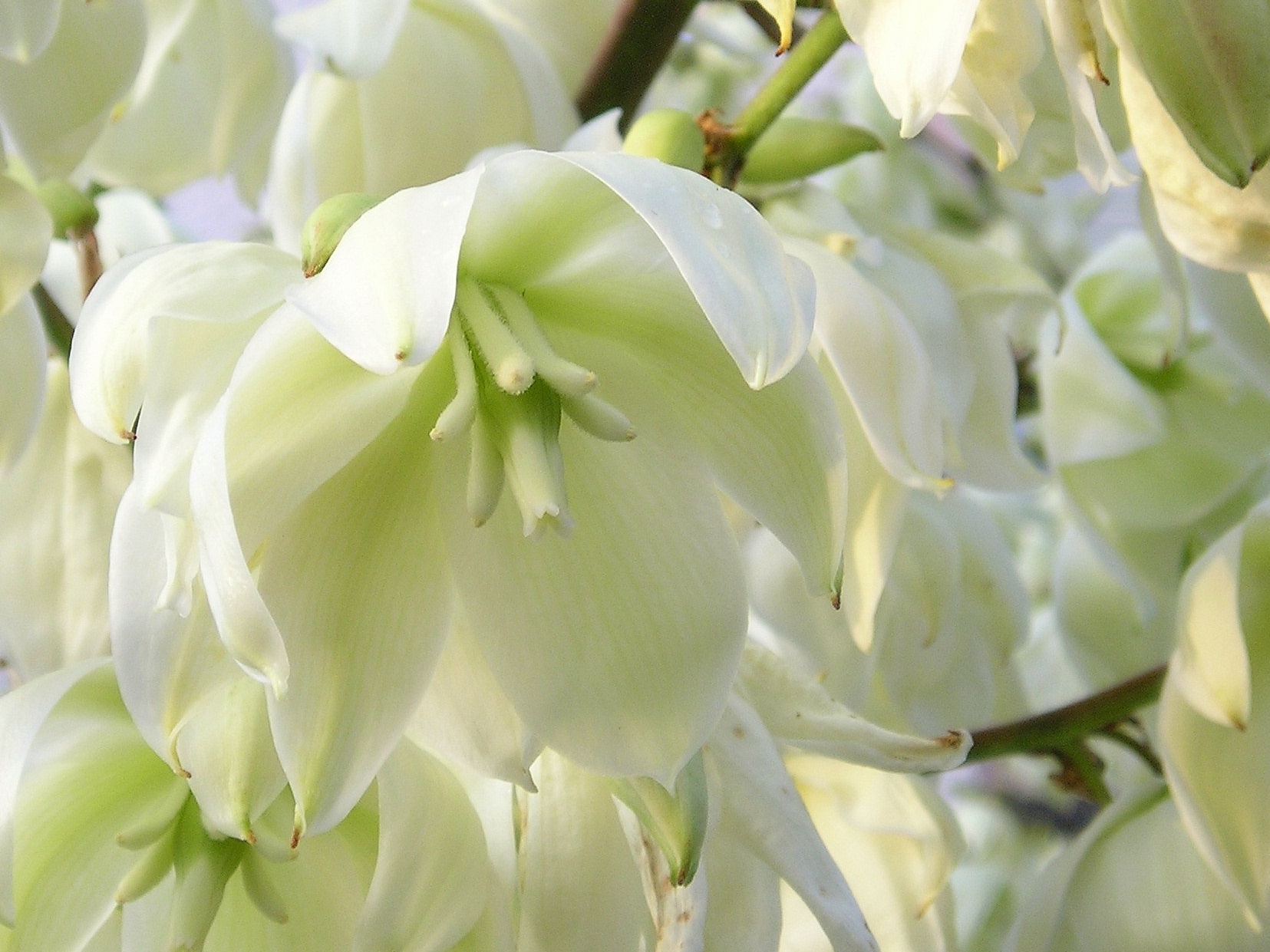
Drought-resistant perennials forming a basal rosette of grayish-green, stiff, sword-shaped leaves (12–30 in long). Edges are decorated with characteristic peeling white curly threads. Fragrant, bell-shaped white or cream flowers bloom in late spring on a massive central spike. It has a unique symbiotic relationship with the Yucca moth, which is its sole pollinator. Sharp leaf tips (spines) can cause puncture wounds. Leaves and roots contain saponins; edible roots can be toxic in very large quantities if not prepared correctly.
Papermaking/Natural Dye Uses and Processes
Yucca produces the strongest leaf fibers native to North America. The fibers are long and exceptionally durable, though they constitute less than 20% of the leaf's total weight. 60–80 leaves per plant, per year, may be collected. Inner leaves yield finer fibers; outer leaves are coarser.
Fiber Processing: For fresh fiber, remove the outer skin (epidermis), through scraping and cut points off all leaves to avoid dark spots in the final pulp. Then soak in water for 24 hours. If using dry fiber wash and pre-soak for 12-24 hours .
Cook for 2-4 hours with alkaline solution (soda ash, lye, or lime) to break down fibers. Length of cooking time depend on toughness of fiber and cooking solution. Rinse fiber until water is clear. PH strips can be used to monitor the removal of cooking chemical. Use proper protective coverings when handling cooking chemicals and solutions. Recommended to cook outdoors or in very well ventilated area on an electric burner. Whenever preparing paper fibers designate a pot, utensils and measuring implements solely for fiber cooking. Beat by hand for 30 minutes to 1 hour 30 minutes, Ball mill for 4 hours, hollander beat for 2.5 hours or use a blender with short pulses for a textured paper.
Scraping fresh leaves produces a brilliant white fiber but is labor-intensive. Natural "snow-retting" (leaving leaves out over winter) produces a strong brown fiber. Leaving leaves to ret naturally longer may produce a gray paper, but it will also be brittle. Chemical extraction (using sodium hydroxide) often produces green-colored fibers due to residual chlorophyll.
History and Culture
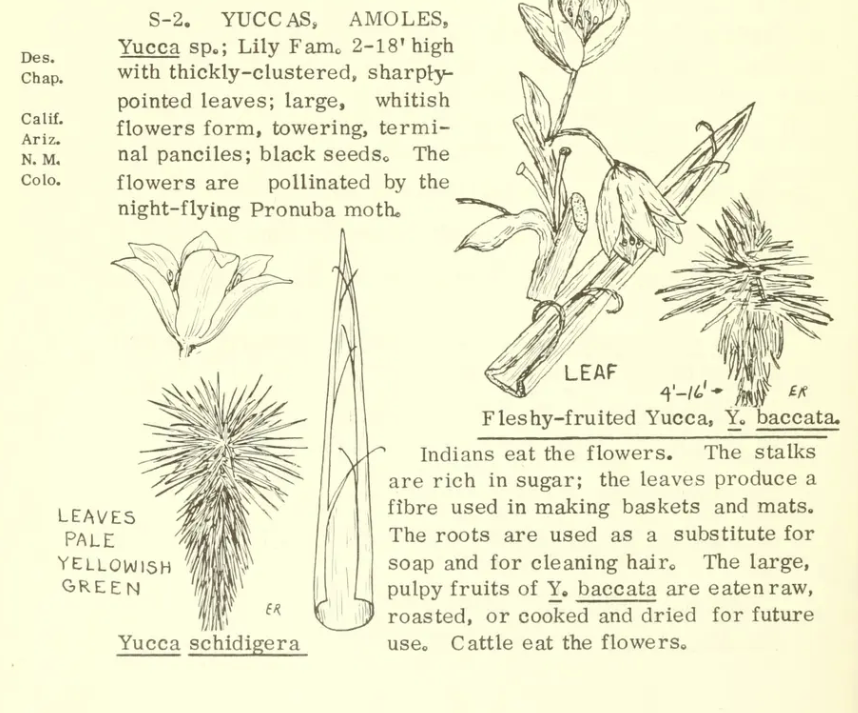
Historically vital to Southeastern tribes (Cherokee, Catawba, Nanticoke) for cordage, fishing nets, clothing, and baskets. The roots contain high levels of saponins, traditionally used to create "soap root" for washing. Medicinally, root salves were used by Native Americans to treat rheumatism and skin inflammations. Sometimes called “Confederate Flax”; used as a substitute for hemp cordage in nineteenth-century America due to its extreme tensile strength.
Acknowledgement: Historically Yucca fiber was often processed by enslaved individuals.