Brown Cotton, Upland Cotton
( Gossypium Hirsutum L. )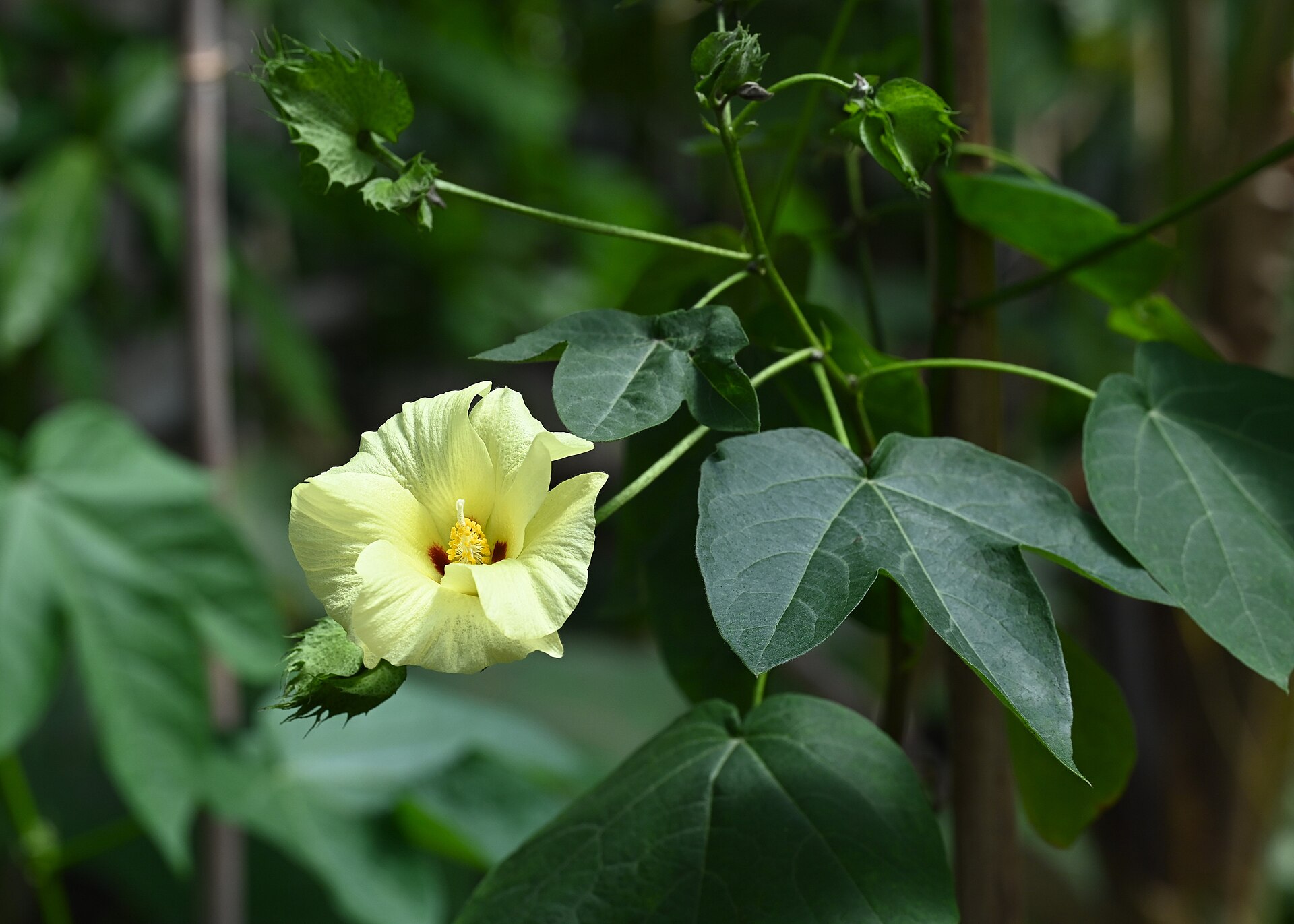
Quick Facts:
Planting and Care
Light: full sun
Water: drought tolerant
Soil: well-drained; clay, loam, or sand
Requires at least 180 frost-free days. Germination occurs when soil reaches ~54F
Propagation: From seeds that grow within the boll fiber
Growth Cycle: Flowers bloom for a period of 3–5 weeks. Each flower lasts 2–3 days.
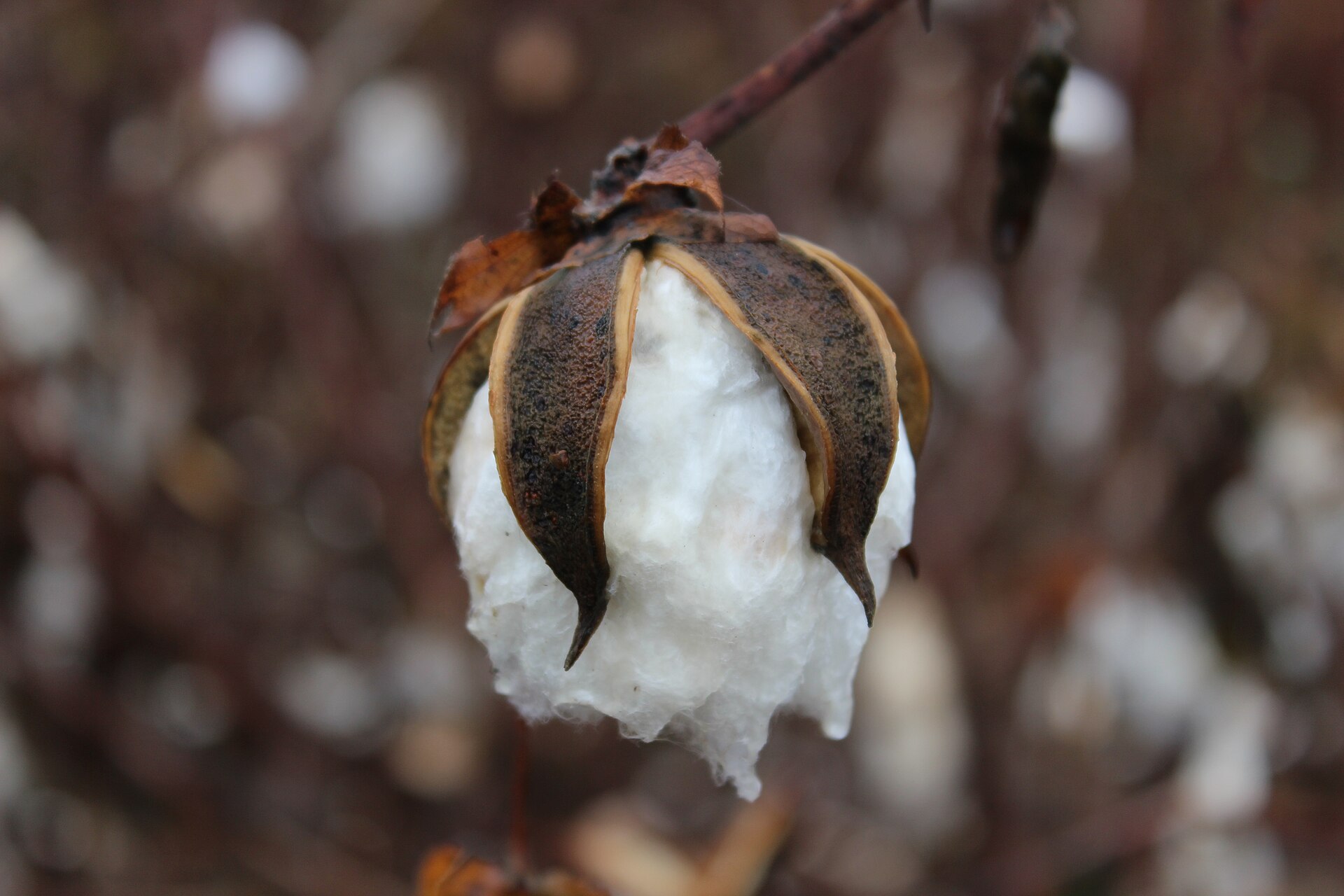
Bolls develop through late summer and will split open when mature, revealing cotton fibers.
Susceptible to pests such as aphids and thrips, and to seedling rot and bacterial disease.
Botanical Information
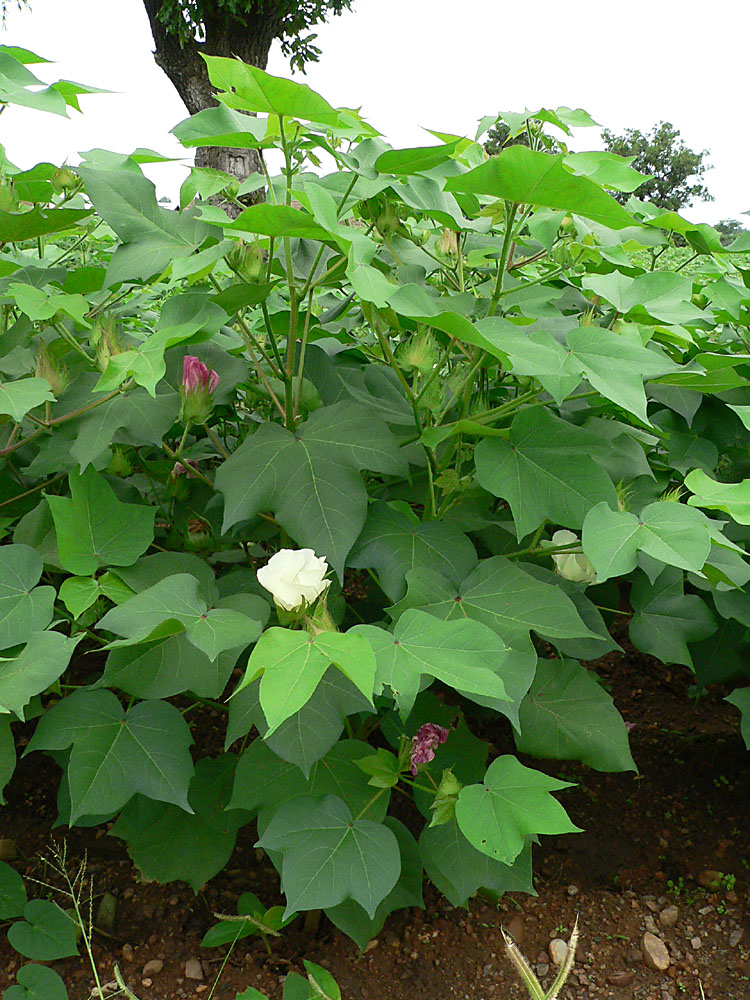
Height: 3–6 ft
Spread: 2–4 ft
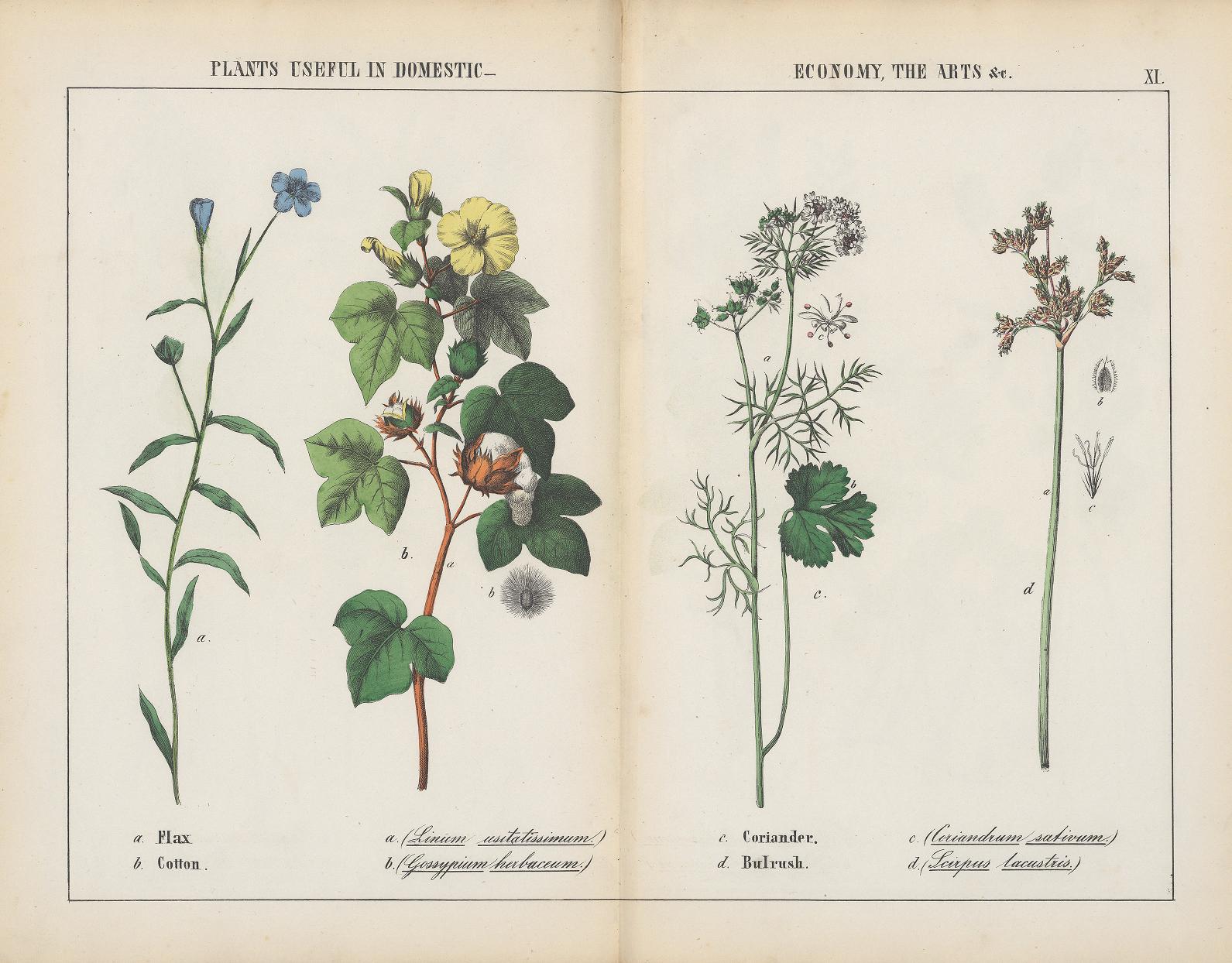
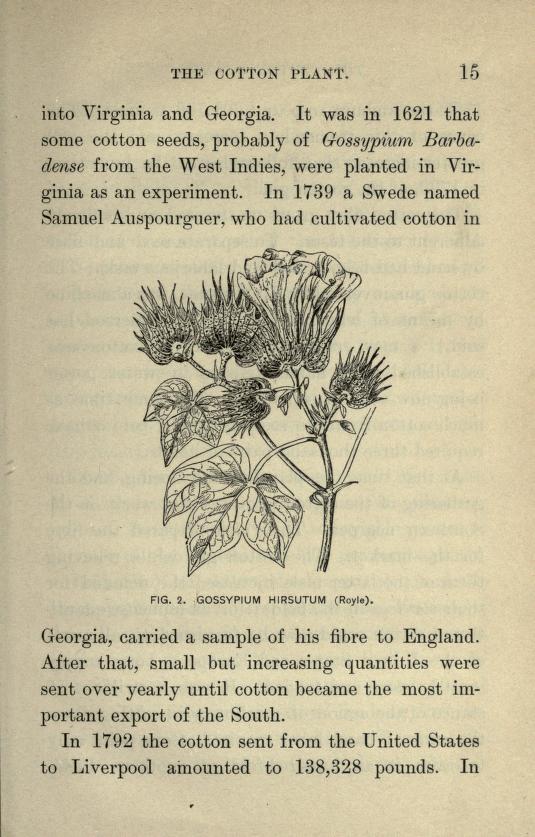
Grows from sea level to 1,200 m. Produces branching stems with large, showy, yellow or white hibiscus-like flowers. Flowers appear in mid-summer, followed by a cotton boll that matures from green to brown or copper. Each boll contains seeds surrounded by two fiber types: short fibers (linters) and long staple fibers. Fibers may be white, green, brown, or mixed.
Papermaking/Natural Dye Uses and Processes
Cotton is one of the most important plant fibers in papermaking due to its high cellulose content (up to 90%) and low lignin levels. Fibers are long, strong, and flexible, producing thin yet durable sheets with minimal shrinkage. This makes cotton especially valued for archival and high-quality papers.
Fiber Processing: Pulping raw cotton is very difficult since it is prone to knotting and matting; historically cotton paper was produced from pre-processed textile waste, or rags.
Raw Cotton: Raw cotton is cleaned and lightly separated. Fibers need to have natural oils removed, which is done by simmering fibers for at least 1 hour in lye and water. Neutralize, rinse, and dry the fiber. It is recommended to cook outdoors or in very well ventilated area on an electric burner. Whenever preparing paper fibers designate a pot, utensils, and measuring implements solely for fiber cooking. Card to further separate the fibers. Use a beater to create pulp.
Rag Cotton: Rags were sorted based on fabric quality and retted for two to five weeks to break down the fibers. By the 19th century, lye and chlorine were introduced to accelerate this stage. The softened rags were pulped by beating and then formed into sheets.
The stems of the cotton plant remaining after crop harvest can also be used for papermaking. Remove leaves, steam stems and strip bast fiber to prepare.
History and Culture
By the mid-19th century, paper demand for exceeded rag supply, which accelerated the shift toward wood pulp. Cotton fiber use declined in industrial paper but remained important for specialty papers. Used for textiles since 6000 BCE, cotton now accounts for the majority of global fiber production.
Cotton produced by enslaved labor was a historical source of material for rag papers. Cotton sold to mills was transformed into textiles, which were recycled as rags and processed into paper.