Turmeric
( Curcuma Longa )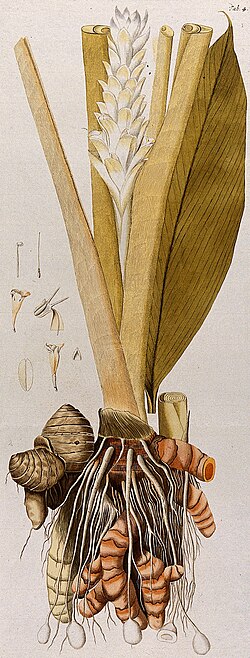
Quick Facts:
Planting and Care
Light: partial to full sun
Soil: rich, slightly acidic
Water: moist to wet
In areas where turmeric is not winter hardy, it can be grown as an annual. Rhizomes should be removed from the soil in the fall and stored in a cool, dry location. When grown in containers, the plant requires frequent watering, and repotting may be necessary over time, as the rhizomes can grow large enough to split the container. Rhizomes are harvested in fall when the foliage begins to wilt and die back. Turmeric has no serious insect or disease problems. Red spider mites may occur on older plants, particularly in dry soil conditions, and young leaves can be susceptible to slugs and snails.
Botanical Information
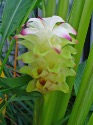
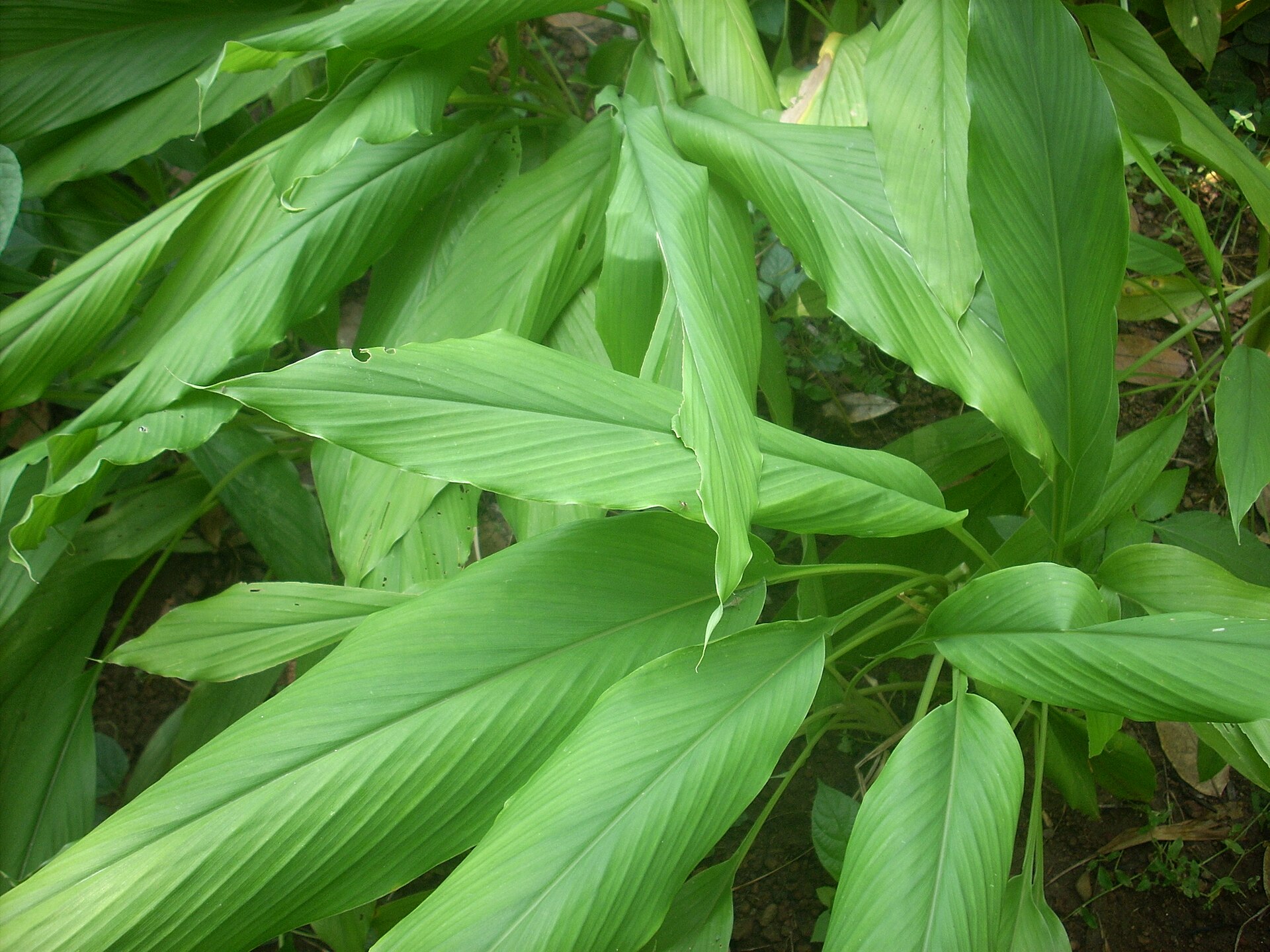
Turmeric produces large, lanceolate, green leaves that can reach up to 40 inches in length, with each shoot bearing 8–12 leaves. Its yellow-white flowers appear as dense, short spikes measuring 4–6 inches long; the flowers are sterile and do not produce viable seeds. The seeds are small, ovoid, and brown, and the rhizomes are thick and branched. The plant's active compound is curcumin, a naturally occurring polyphenol with both antioxidant and anti-inflammatory properties.
Papermaking/Natural Dye Uses and Processes
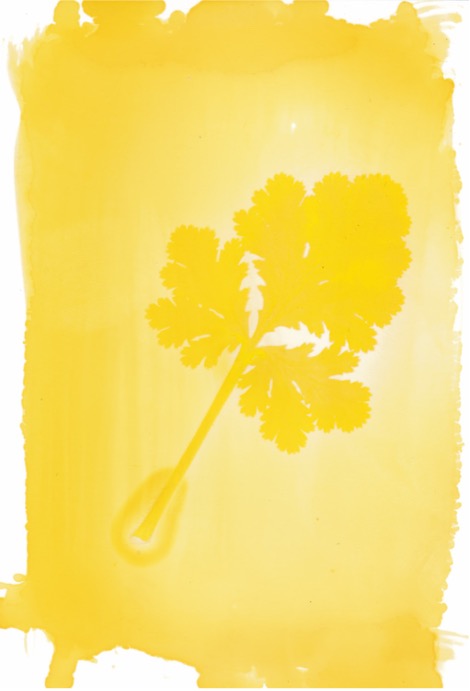
Turmeric can be used as a dye on its own or with a mordant such as alum to produce a bright yellow color. It is a fugitive dye, meaning it will fade with exposure to sunlight and washing. The recommended ratio is 50g of turmeric per 100g of fabric.
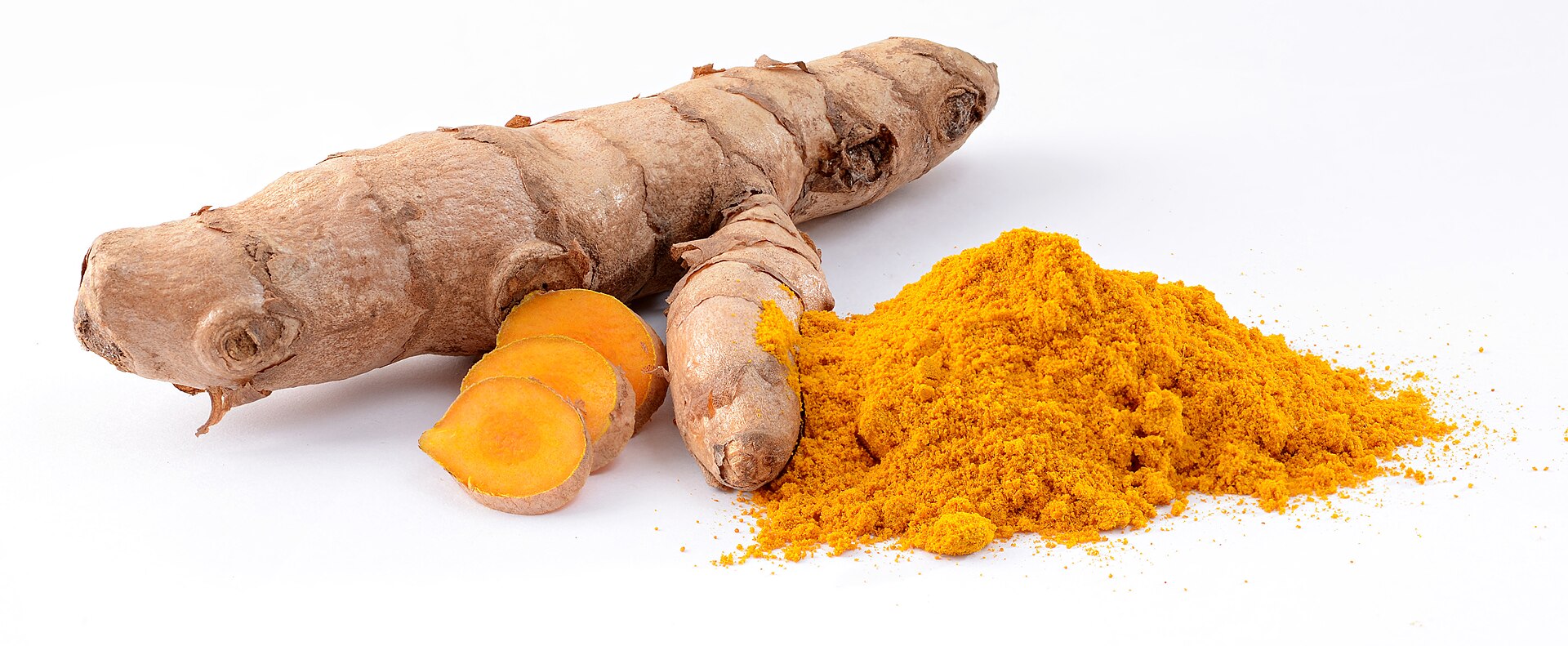
To prepare turmeric dye, fresh turmeric root or ground turmeric powder can be used. Powdered turmeric is mixed with a little warm water to make a paste, then simmered with a little more water until the powder has fully dissolved. To make dye from the root, cut into small chunks and blend (or hand pound) into pulp, then add to hot water until homogenous. Apply the dye to the paper by dipping, spraying, or painting the dyestuff onto the paper. For turmeric, a mordant is not needed.
Whenever preparing natural dyes it is recommended to designate a pot, utensils, and measuring implements solely for dye purposes. Use proper protective coverings when handling cooking chemicals and solutions. It is recommended to cook outdoors or in very well ventilated area on an electric burner.
History and Culture
The genus name Curcuma derives from the Arabic word kurkum, meaning saffron, a reference to the spice's resemblance to saffron in color. Turmeric is sometimes called "poor man's saffron" because it is less expensive. The species name longa comes from the Latin longus, meaning "long."