Dyer's Chamomile
( Cota Tinctoria )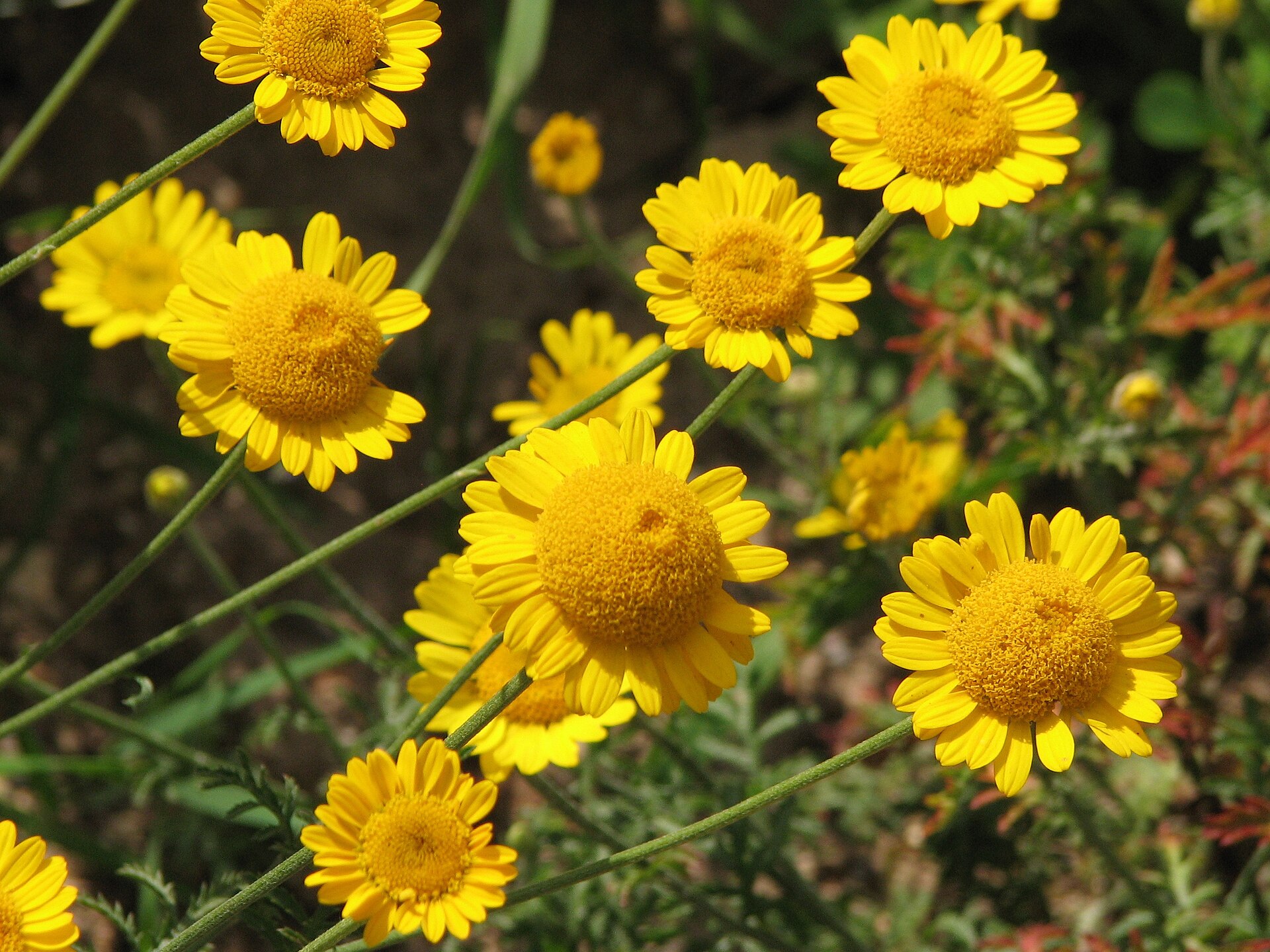
Quick Facts:
Planting and Care
Light: full sun
Soil: well-drained loam
Water: drought tolerant but prefers constant moisture
Botanical Information
Height: 2 ft
Spread: 1 ft
Chamomile produces bright yellow, daisy-like flowerheads typically 2.5–5 cm across, with numerous ray florets surrounding a dense central disc. It blooms from June through September and is highly attractive to pollinators including bees, hoverflies, and butterflies.
Papermaking/Natural Dye Uses and Processes
Chamomile is a part of the daisy family and produces a yellow dye. Once the flowers are simmered, the solution cooled, and solids strained out, and mordanted fiber or fabric is then added and simmered until the desired color is achieved. Flowers can be collected as they bloom and frozen until a sufficient quantity has accumulated.
To prepare the dye, remove the flowers from the stems. Soak blossoms in hot water for 1 hour and then simmer for 1 hour. It can be left to soak for one to two days. After soaking, the dyestuff is strained and applied to paper by dipping, spraying, or painting. A mordant (alum or iron oxide) is used to fix the color, which is usually applied between each coat of dye. Use a mordant with tannins at 8% weight of fiber.
Whenever preparing natural dyes it is recommended to designate a pot, utensils, and measuring implements solely for dye purposes. Use proper protective coverings when handling cooking chemicals and solutions. It is recommended to cook outdoors or in very well ventilated area on an electric burner.
History and Culture
The plant has been used medicinally since ancient times, with references to its use found in Greek and Roman sources. It is recognized for its antiseptic, anti-inflammatory, and relaxant properties, and has been used to treat skin infections, reduce pain and swelling, and address anxiety and stress. It is also used as a digestive aid for conditions such as indigestion, gas, and bloating, and appears in cosmetic products for its skin-soothing and moisturizing qualities.