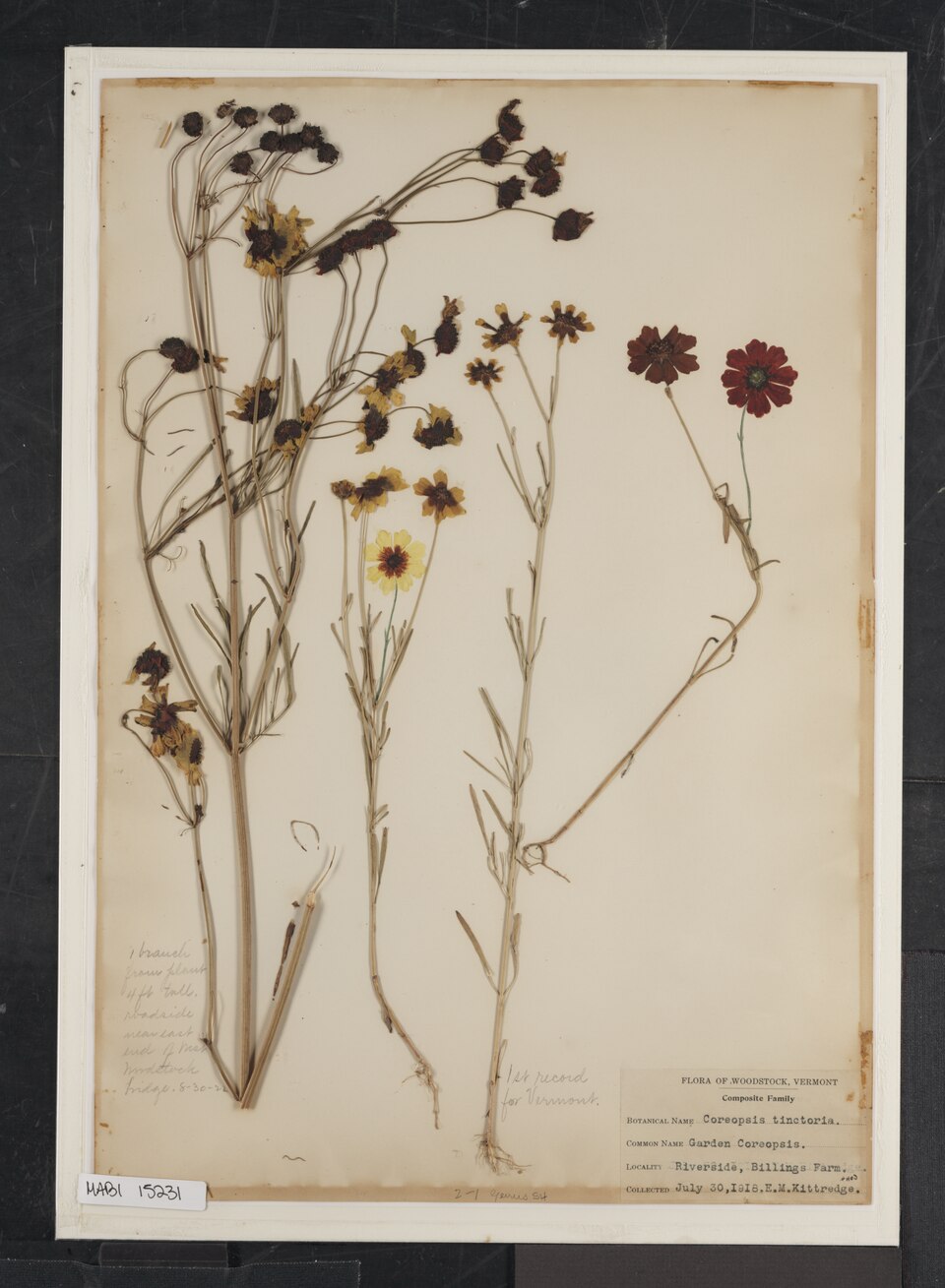
Dyer's Coreopsis
( Coreopsis Tinctoria )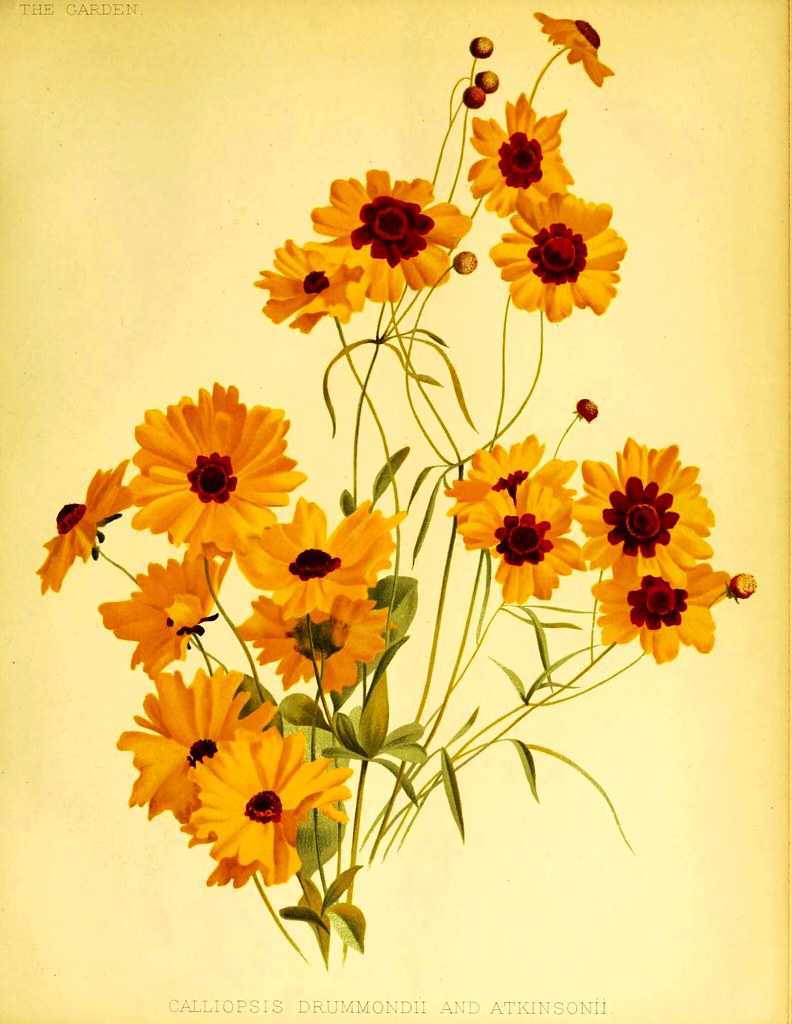
Quick Facts:
Planting and Care
Light: partial to full sun
Soil: moist, sandy soils
Water: Shallow roots are susceptible to drying out, so constant moisture is needed.
It is prone to slug and snail damage. Notably, the flowers face south toward the sun, so plants are best situated where they can be viewed with the midday sun behind the observer. Coreopsis grows well in rotation with Japanese Indigo or Woad.
Botanical Information
Height: 4 ft
Spread: 2 ft
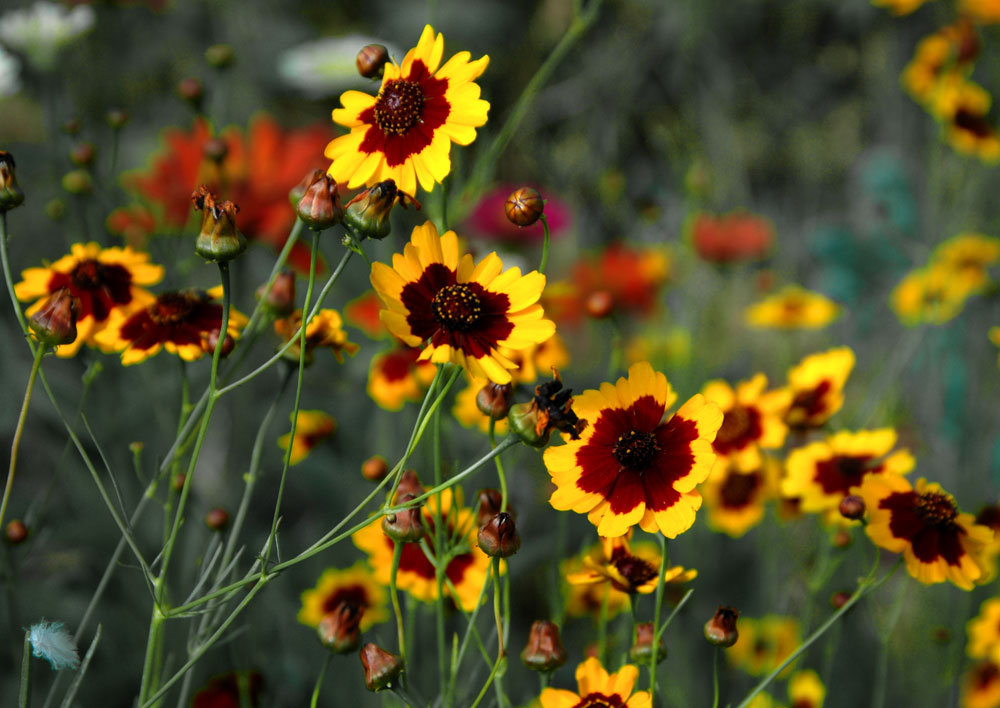
Dyer's Coreopsis produces numerous smooth, slightly angled branches bearing showy, daisy-like flowerheads with yellow rays surrounding a reddish-purple central disc. Though native to North American prairies, it is now grown primarily as a decorative garden flower or as part of wildflower mixes. In some areas it can be treated as a biennial and sown directly in autumn for spring flowering the following year.
Papermaking/Natural Dye Uses and Processes
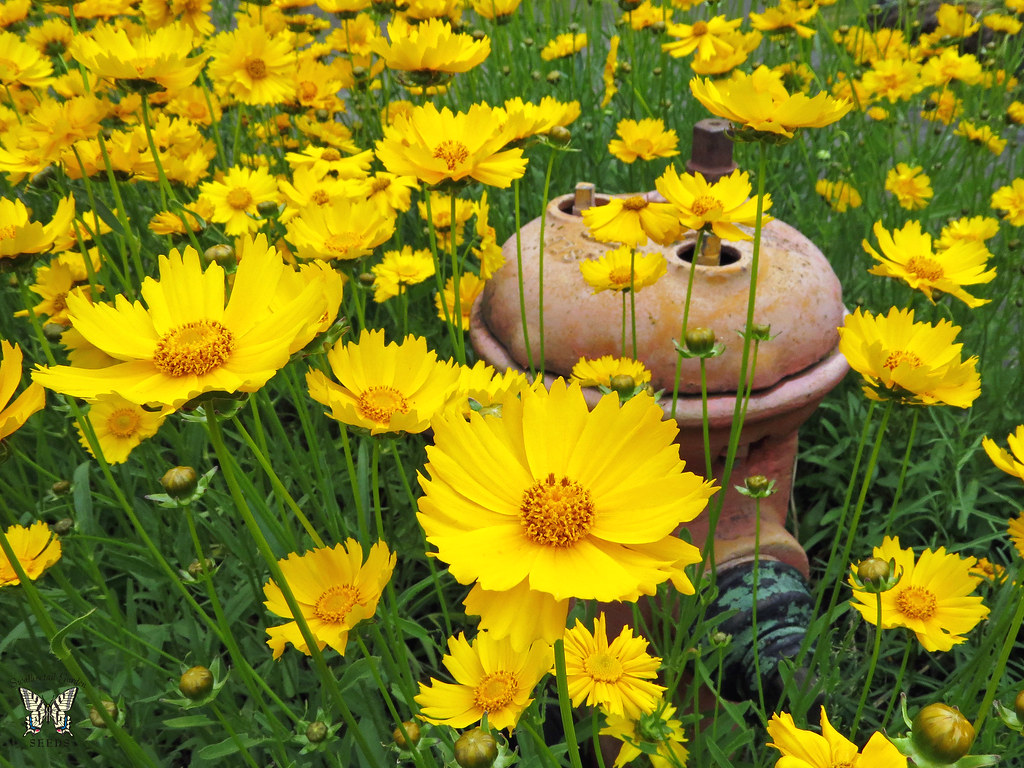
Although Dyer’s Coreopsis (Coreopsis Tinctoria) is the most common variety of Coreopsis used for natural dye, many varieties can be used. The museum planted Threadleaf Coreopsis in the circular planter due to its more compact size and fuller appearance. However, Dyer's Coreopsis is planted in the larger garden bed.
Coreopsis produces light orange to bright orange and brown dye. The dyes in Coreopsis are highly soluble, making extraction straightforward: boiling water poured over the flowers and left to soak is sufficient. If simmered, the dye from the flowers will vary in color depending on the length of time simmered and the concentration of flowers.
After soaking, the dyestuff can be strained and applied to paper by dipping, spraying, or painting it on. To fix the color, apply a mordant like alum or iron oxide between each coat of dye.
Whenever preparing natural dyes it is recommended to designate a pot, utensils, and measuring implements solely for dye purposes. Use proper protective coverings when handling cooking chemicals and solutions. It is recommended to cook outdoors or in very well ventilated area on an electric burner.
History and Culture
Native American uses of the plant include root tea prepared for treating diarrhea and as an emetic, dried tops brewed as a tea to strengthen the blood, and a drink made from the boiled plant to treat internal pain and bleeding.