
Living Exhibition Plant Catalog
Explore traditional papermaking and natural dye plants that grow in our garden! Examples will be added overtime to the physical beds. Please note that this is not a complete list of all papermaking and natural dye plants.
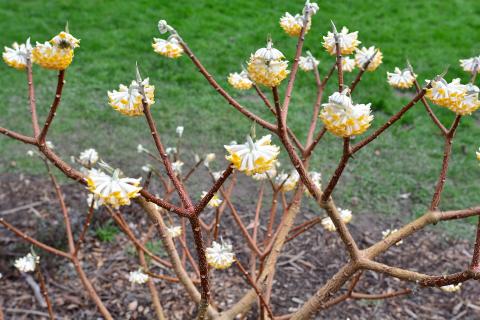
Mitsumata, Paperbush
Type: Deciduous Suckering Shrub
Family: Thymelaeaceae
Uses in Papermaking and Dye
Mitsumata fibers are long (approximately 3–12 mm), producing paper that is strong yet softer and more lustrous than kozo papers. The paper is light brown/off white, but the pulp extraction process impacts the resulting shade, with higher heats and stronger alkaline solutions producing darker paper. Harvest timing affects quality. Bark collected…
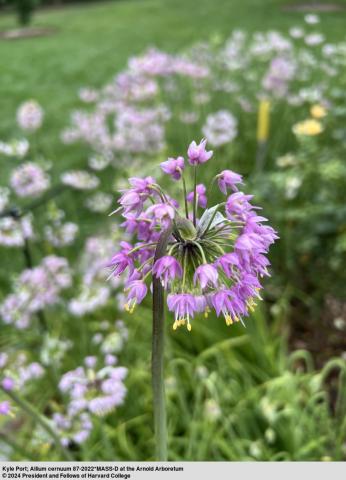
Onion
Type: Herbaceous
Family: Amaryllidaceae
Uses in Papermaking and Dye
While the dye colors produced are slightly different, depending on the variety of onion used and other compounds found in the skins, the primary dye component is called pelargonidin (3, 5, 7, 4 tetrahydroxy antocyanidol). White onions will produce orange tones (deep yellow to pumpkin orange), while red onions produce a reddish brown. It is…
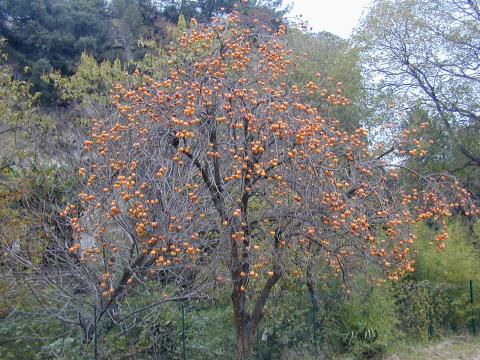
Persimmon
Type: Woody, Deciduous Tree
Family: Ebenaceae
Uses in Papermaking and Dye
Persimmon has a strong history in papermaking all over the world, and is used for many techniques. The simplest way of preparing a persimmon dye is simply to grate the unripe fruit into a pulp, squeeze out the juice, and apply it directly to fabric, paper, or wood, before drying it in direct sunlight. It will oxidize into shades of orange to…
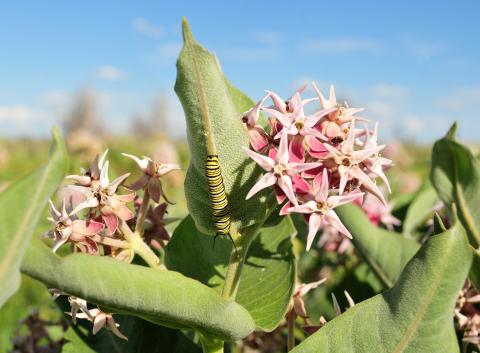
Showy Milkweed
Type: Herbaceous Perennial Flower
Family: Asclepiadaceae
Uses in Papermaking and Dye
Bast Fiber: 5 lbs. of stems yield approximately 1.5 lbs. of fiber (about 14% of the plant is usable fiber). Fibers are slightly longer than cotton or kenaf with average tensile and burst strengths.
Bast Fiber Processing: Best harvested in late August-September or winter after pods form. Winter-harvested stalks require less retting and…
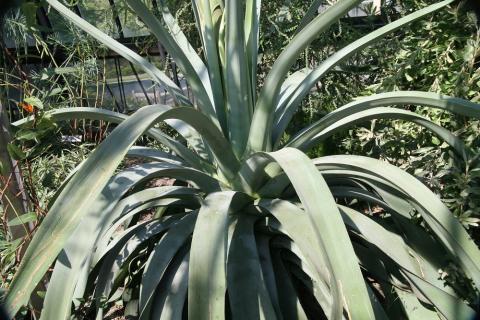
Sisal
Type: Perennial evergreen shrub
Family: Asparagaceae
Uses in Papermaking and Dye
Sisal is a commercial leaf fiber, prized for its high cellulose content, mechanical strength, and flexibility.
Initial harvest occurs 2–4 years after planting. Mature leaves closest to the ground yield the longest, coarsest fibers. Fibers from the base of leaves are shorter and fiber length extends closer to the top. The outer cuticle…
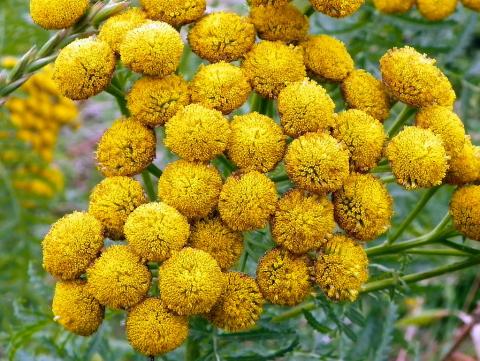
Tansy
Type: Herbaceous Perennial
Family: Asteraceae
Uses in Papermaking and Dye
The flowers contain high levels of apigenin and luteolin, the same yellow dye compounds found in weld. The leaves contain related but slightly different compounds, resulting in a marginally different yellow when used separately in the dye pot. Tansy flowers produce varying shades of yellow, green-yellow, gold, and bronze dyes.
To prepare…
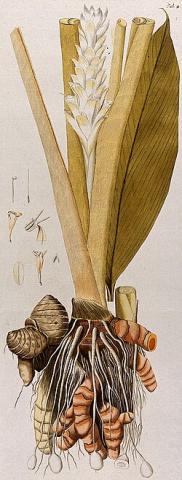
Turmeric
Type: Herbaceous Perennial
Family: Zingiberaceae
Uses in Papermaking and Dye
Turmeric can be used as a dye on its own or with a mordant such as alum to produce a bright yellow color. It is a fugitive dye, meaning it will fade with exposure to sunlight and washing. The recommended ratio is 50g of turmeric per 100g of fabric.
To prepare turmeric dye, fresh turmeric root or ground turmeric powder can be used.…
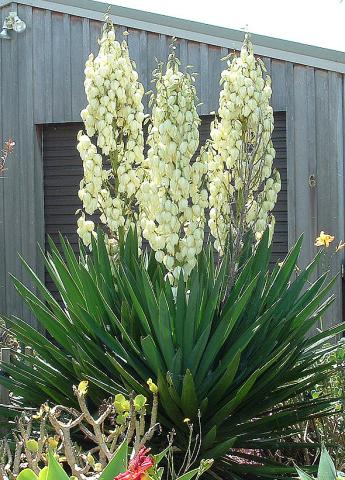
Yucca
Type: Perennial evergreen shrub
Family: Asparagaceae
Uses in Papermaking and Dye
Yucca produces the strongest leaf fibers native to North America. The fibers are long and exceptionally durable, though they constitute less than 20% of the leaf's total weight. 60–80 leaves per plant, per year, may be collected. Inner leaves yield finer fibers; outer leaves are coarser.
Fiber Processing: For fresh fiber, remove the…